
Architectural vs. 3-Tab Shingles in Alabama
Architectural or 3-tab shingles for a Gulf Coast roof? Compare wind performance, weight, appearance, and where each one actually makes sense.
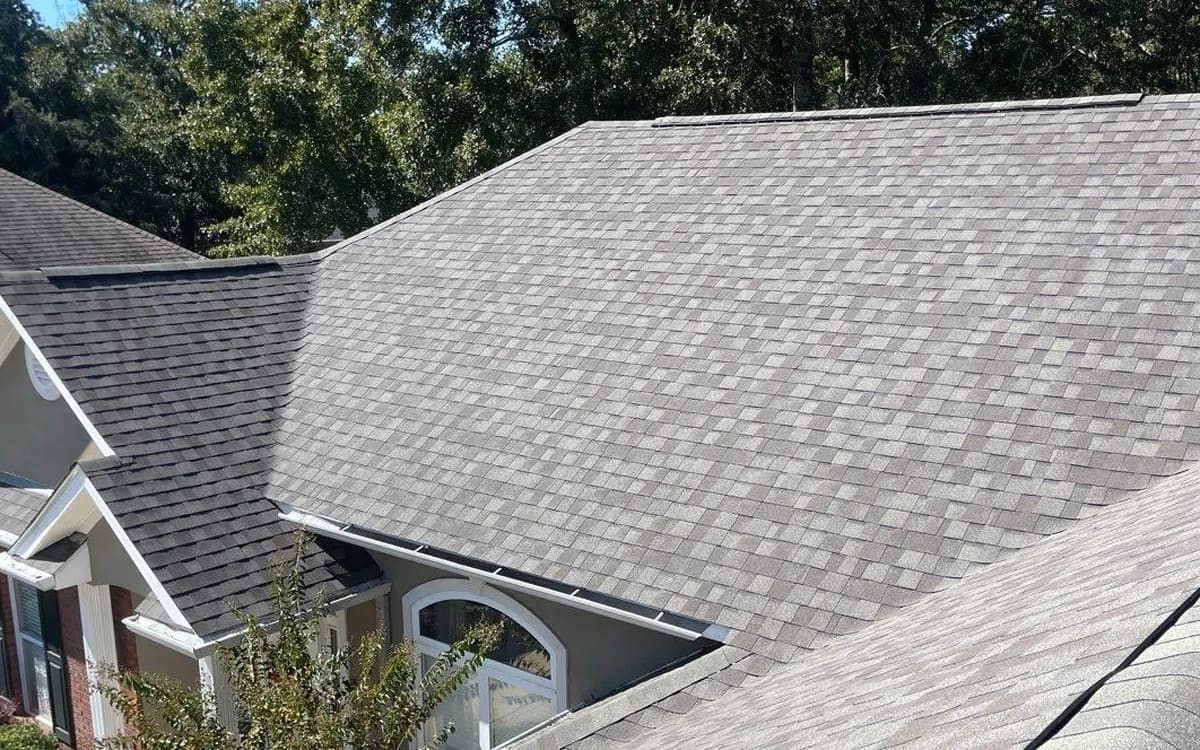
If you're comparing shingle options for a Gulf Coast roof, the choice usually comes down to architectural versus 3-tab — two different constructions of the same basic material, with real differences in wind performance, weight, look, and typical cost tier. Here's how they actually compare, without steering you toward the more expensive option just because it's more expensive.
What Separates the Two, Physically
3-tab shingles are a single flat layer of asphalt, cut into a uniform three-tab pattern that creates the classic flat, evenly striped look. Architectural shingles — sometimes called dimensional or laminate shingles — are built from two or more layers laminated together, which gives them a thicker profile, a randomized shadow-line texture, and noticeably more material per square than 3-tab. That extra layering is the source of nearly every difference between the two products.
Wind Performance: The Category That Matters Most on This Coast
This is where the layering pays off directly. Architectural shingles generally carry a higher wind rating in comparable product lines than 3-tab, both because of the added material and because their construction gives fasteners a stronger surface to bite into. That said, wind rating on paper and wind performance in the field aren't the same thing — nailing pattern, nail placement in the correct zone, and proper sealing at the starter course and edges determine how either shingle actually performs in a named storm as much as the product spec does. A well-installed shingle of either type still beats a poorly installed premium one.
Weight and What It Means for the Deck
Architectural shingles weigh meaningfully more per square than 3-tab, which is rarely an issue on a roof deck built to current code, but is worth mentioning if you're re-roofing an older structure. It's part of what a pre-installation inspection checks — not a reason to worry, but a reason to have the deck assessed rather than assumed.
Appearance: A Bigger Difference Than It Sounds
3-tab shingles have a flat, uniform, repeating pattern — the traditional roof look most people picture by default. Architectural shingles have a randomized, textured, dimensional appearance that reads as a heavier, more upscale roof from the street, closer in visual weight to wood shake or slate depending on the product line. This is largely a taste and curb-appeal decision, but it's a real one — architectural has become the market's default for a reason, and it shows in resale expectations in a lot of neighborhoods.
Availability and Where 3-Tab Still Makes Sense
Architectural has taken over most of the residential market, but 3-tab is still manufactured and installed, and it remains a legitimate choice — for a detached structure, a rental property, or simply where budget is the deciding factor and the traditional flat look isn't a drawback. There's no wrong answer here as long as the choice is made deliberately rather than by default. Some homeowners also choose 3-tab specifically to match an existing, older section of roofline on an addition or outbuilding, where consistency with what's already there matters more than upgrading to a heavier profile.
A Note on Uniformity vs. Texture
Beyond wind rating and weight, the visual pattern itself is a real functional difference, not just a style preference. 3-tab's uniform, repeating cutouts mean any imperfection in alignment during installation is more visible from the street, since there's no randomized texture to hide it in. Architectural's staggered, dimensional pattern is more forgiving of minor variation for the same reason it looks heavier — the randomness that creates the shadow-line effect also masks small inconsistencies. It's a minor point, but it's part of why installation quality shows up more plainly on a 3-tab roof than on an architectural one.
Repair and Replacement Down the Road
There's a practical difference here too, beyond the initial install. Because 3-tab shingles have been produced in a narrower range of profiles for longer, matching an existing roof for a partial repair years later is often more straightforward. Architectural shingles come in far more colors, textures, and dimensional patterns across manufacturers and even within a single product line's production runs, which means an exact match for a repair on an older architectural roof can be harder to source, especially if the original product has been discontinued or the color has weathered over time. It's rarely a dealbreaker, but it's worth knowing going in — a roofer doing a repair on an aging architectural roof may recommend re-shingling a full slope rather than chasing a color match that isn't quite achievable.
What This Means for Cost — Without a Price Chart
Architectural shingles generally carry a higher material cost than 3-tab, which is one of several factors — alongside roof size, pitch, tear-off scope, and underlayment — that move a replacement's total number. We cover the full factor model, with zero invented price figures, on our what drives roof replacement cost post. If you're also weighing shingles against metal roofing entirely, our metal vs. shingle comparison covers that broader decision.
So Which One Should You Choose?
For most Gulf Coast homeowners prioritizing wind performance and long-term value, architectural shingles are the stronger default choice — the added material and wind rating matter more here than in a low-wind inland market. But 3-tab isn't obsolete, and it's a reasonable call where budget or a specific look takes priority. Either way, the installation — nailing pattern, sealing, and flashing detail — determines more of the real-world performance than the product line alone. That's the part worth getting an experienced eye on before you sign anything. Our shingle roofing page covers what a proper installation includes for either type, and a roof inspection is the honest starting point if you're not sure which your current roof even has.
Related on our site
Common questions
Questions we get about this
What's the difference between architectural and 3-tab shingles?
Architectural shingles (also called dimensional shingles) are built from multiple laminated layers, giving them a thicker, textured, more dimensional look and generally a heavier per-square weight. 3-tab shingles are a single flat layer with a uniform, tabbed profile — lighter, thinner, and the more traditional flat look.
Which shingle type handles wind better?
Architectural shingles generally carry a higher wind rating than 3-tab in comparable product lines, in part because their layered construction and larger nailing surface hold up better under uplift. Installation quality still matters more than the shingle type alone — a poorly nailed architectural shingle can underperform a properly installed 3-tab.
Are 3-tab shingles still available?
Yes, though they've become less common as architectural shingles have taken over most of the residential market. They're still manufactured and installed, and remain a valid option where budget or a specific traditional look is the priority.
Do architectural shingles last longer than 3-tab?
Architectural shingles are generally built with more material and a heavier construction, which typically translates to better wind performance and durability over time — though actual lifespan for either type depends heavily on installation quality, ventilation, and storm exposure, not the product category alone.
Sources
Every non-obvious claim above traces to one of these.
- Asphalt Roofing Manufacturers Association (ARMA)asphaltroofing.org
Keep reading
 Roofing Materials
Metal vs. Shingle Roofing on the Alabama Gulf Coast
Metal or shingle roofing for a Baldwin or Mobile County home? Compare wind resistance, salt-air durability, upkeep, and looks — the real trade-offs.
 Roofing Materials
How Long Does a Roof Last in Alabama's Heat?
There's no single number for how long a roof lasts on the Gulf Coast. What actually shortens a roof's life in Alabama's heat, humidity, and storm exposure.
 Roofing Materials
How to Read a Roofing Quote Before You Sign
What a real roofing quote should spell out — material spec, tear-off scope, warranty terms, and the coastal details many inland-written quotes skip.
Free inspection · no obligation
Want someone to actually look at your roof?
Free inspection anywhere in Baldwin or Mobile County. We climb it, photograph it, and tell you plainly what we found — then put it in writing.
Licensed Alabama roofing contractor #7430. Free estimates across Baldwin and Mobile County.
Loading the quote form…