
Repair or Replace? How to Decide on Your Roof
A leaking or aging roof doesn't always need a full replacement. Here's the honest framework for deciding between a repair and a replacement on the Gulf Coast.
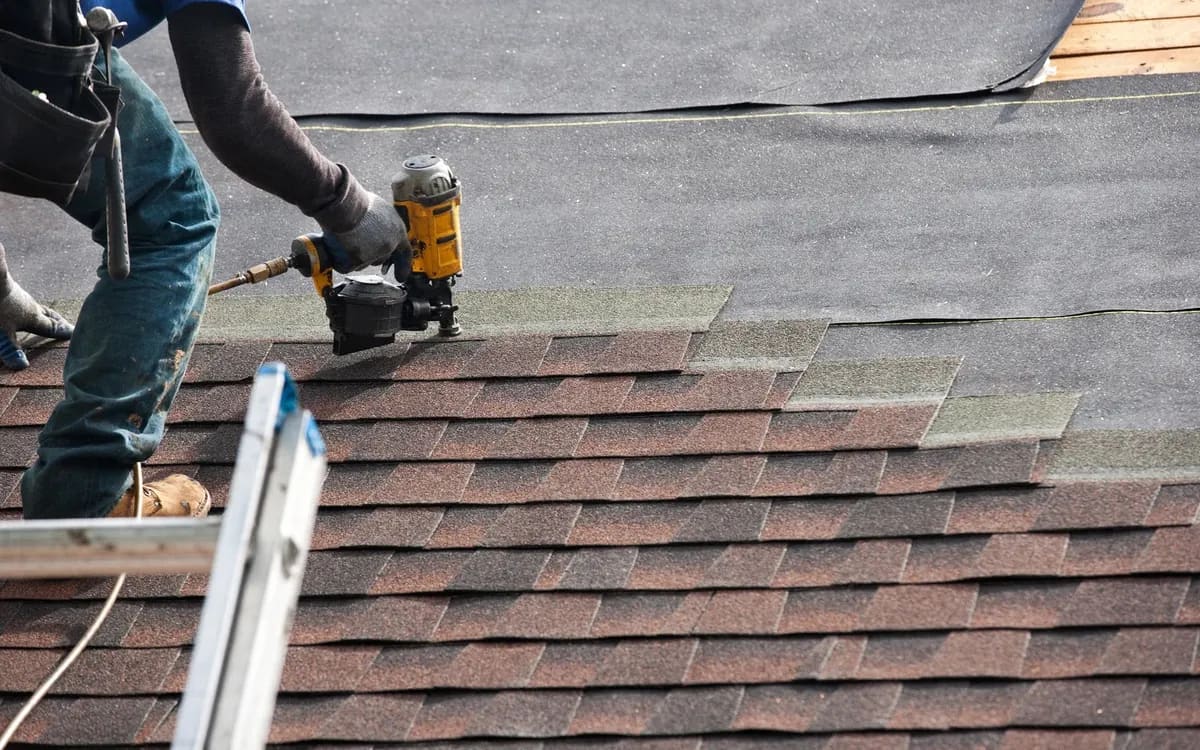
A leak or a patch of damaged shingles doesn't automatically mean a new roof. Most of the time, it means a repair — targeted, fast, and a fraction of the cost of a full system replacement. The harder question is knowing when a repair is actually the wrong call, because it's patching a roof that's already past the point where patching makes sense. Here's the honest framework for telling the two apart.
Start With How Localized the Damage Actually Is
A single missing shingle, a failed flashing seal at a chimney, or storm damage confined to one slope of the roof is a textbook repair. The rest of the system is doing its job, and there's no reason to replace a working roof to fix one broken part of it. Our roof repair page covers the range of what a targeted fix handles — leak diagnosis, flashing and pipe-boot resealing, and storm-damage spot repair among them. If the problem is contained, the fix should be too.
How Many Times Has This Roof Already Been Patched?
One repair is normal maintenance. A third or fourth repair on the same roof, especially in different locations each time, is a signal the underlying system is failing broadly and the patches are just chasing symptoms. That pattern — recurring leaks in new spots rather than the same one reopening — is one of the clearest tells that a roof has moved from "needs a fix" to "needs replacing," even if no single problem looks severe on its own.
What's Actually Underneath the Surface Layer
Shingles or panels are only part of the system. Decking, underlayment, and flashing all have their own condition independent of how the visible surface looks. A roof that looks fine from the street can have soft or rotted decking found only once a repair opens it up — and conversely, a roof that looks rough can sometimes have a perfectly sound deck underneath, needing only a surface-level fix. This is the part homeowners genuinely can't assess from the ground, which is why an inspection matters more than a visual guess in either direction.
Age Is a Clue, Not a Verdict
A roof's age matters, but it's not the whole story — see our breakdown of what actually shortens a roof's life in this climate for why calendar age and real condition can diverge significantly. A well-maintained, well-ventilated roof can still have useful life left well past when a poorly maintained one of the same age is already failing. Use age as a reason to look closer, not as the deciding factor on its own.
The Storm-Damage Wrinkle
Storm damage changes the math in both directions. Sometimes a single hard hit — a fallen limb, a hail event, straight-line wind — causes damage severe enough to justify replacement even on a relatively young roof, because the structural integrity of a section is compromised. Other times, what looks like widespread storm damage is actually cosmetic and repairable once it's properly assessed. Our storm and insurance restoration page covers how that assessment works, including insurance documentation, which brings up the next factor.
The Insurance Angle Changes the Decision, Not the Facts
If the damage is storm-related, what your insurance covers can shift which option makes financial sense — a policy that covers a full replacement after storm damage changes the calculation compared to paying for a repair out of pocket. That's worth understanding before you decide, not after. Our roof insurance claims resources walk through what typically gets covered and how the adjuster process works, and our page on roof age and insurance covers how an aging roof specifically factors into a claim or a policy renewal.
The Repeated-Repair Math Worth Actually Running
Repairs are individually cheaper than replacement, but repeated repairs on a system nearing the end of its service life can add up to a real number over a few years — and you're still left with an aging roof once they're done. That's not a reason to jump to replacement early. It's a reason to have an honest conversation about where your specific roof stands rather than defaulting to "just patch it again" every time.
When a Second Opinion Is Worth the Extra Call
If a quote you've received jumps straight to "full replacement" without much explanation of why a repair wouldn't work, it's reasonable to ask for the specific reasoning — what was found, and why it rules out a targeted fix. A legitimate answer references something concrete: the extent of decking damage, the number of prior repairs, or the condition of the underlayment, not just "it's old" or "it needs it." If that explanation doesn't add up, or if two contractors give you meaningfully different recommendations for the same roof, a second inspection is worth the extra half hour. It costs you nothing to confirm you're making the right call on what's usually one of the larger decisions a homeowner makes about their house.
The Bottom Line
Localized, first-time damage on an otherwise sound roof: repair it. Recurring leaks in new locations, failing decking, or damage severe enough to compromise the structure: it's time to talk replacement. Everything in between is exactly what an inspection is for — an honest, on-roof assessment that tells you which category your house actually falls into, instead of guessing from the driveway or assuming the worst. A free inspection is the fastest way to get a real answer either way.
Related on our site
Common questions
Questions we get about this
How do I know if I need a roof repair or a full replacement?
It comes down to how localized the damage is, how many times the roof has already been patched, and whether the underlying deck and underlayment are still sound. A single storm-damaged section on an otherwise healthy roof is usually a repair. Widespread wear, repeated leaks in different spots, or soft decking found during an inspection point toward replacement.
Is it cheaper to repair a roof than replace it?
In the short term, almost always — a targeted repair costs less than a full tear-off and system replacement. The honest caveat is that repeated repairs on a roof nearing the end of its service life can add up and still leave you with an aging system underneath. That's a case-by-case math problem an inspection helps you actually run, not a rule of thumb.
Can insurance help pay for a roof repair or replacement?
Depending on the cause of damage and your policy, storm-related repairs and replacements are often covered, subject to your deductible and the adjuster's assessment. Wear-and-tear from age typically isn't. Our roof insurance claims resource covers what the process actually looks like and what tends to get approved.
What happens if I ignore a roof problem too long?
A small leak rarely stays small. Water finds the path of least resistance into decking, insulation, and eventually interior ceilings and walls, and what started as a minor fix becomes a much larger repair once it spreads. Catching it during an inspection, rather than after it shows up as a stain on the ceiling, is almost always the cheaper outcome.
Sources
Every non-obvious claim above traces to one of these.
Keep reading
 Roofing Materials
How Long Does a Roof Last in Alabama's Heat?
There's no single number for how long a roof lasts on the Gulf Coast. What actually shortens a roof's life in Alabama's heat, humidity, and storm exposure.
 Maintenance
The Gulf Coast Roof Maintenance Calendar
A season-by-season roof maintenance checklist for Baldwin and Mobile County homeowners, built around hurricane season and this coast's real storm record.
 Roofing Materials
How to Read a Roofing Quote Before You Sign
What a real roofing quote should spell out — material spec, tear-off scope, warranty terms, and the coastal details many inland-written quotes skip.
Free inspection · no obligation
Want someone to actually look at your roof?
Free inspection anywhere in Baldwin or Mobile County. We climb it, photograph it, and tell you plainly what we found — then put it in writing.
Licensed Alabama roofing contractor #7430. Free estimates across Baldwin and Mobile County.
Loading the quote form…