
Why So Many Baldwin County Roofs Are Aging Together
A building boom and a run of hurricanes put a lot of Baldwin County roofs on the same clock. Here's the honest, data-backed read on why.
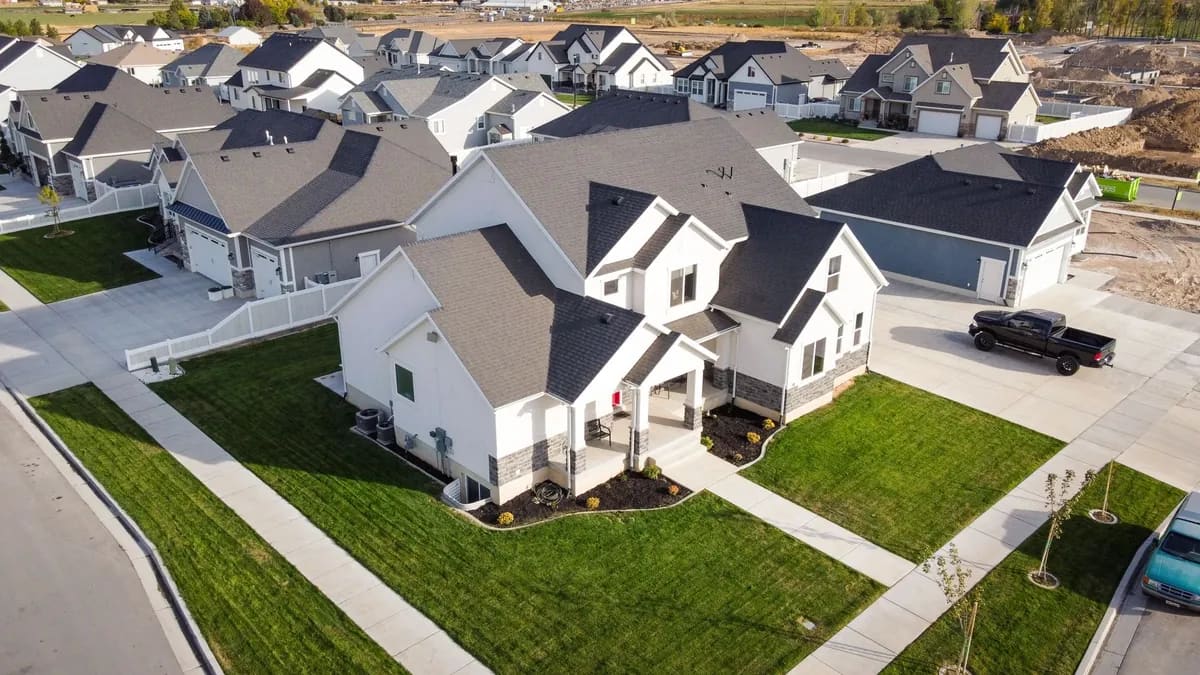
A lot of Baldwin County roofs are the same age for two reasons that compound each other: most of the county's housing was built in a tight window during the 1990s and early 2000s, and two major hurricanes since then forced clusters of insurance-driven replacements in the same narrow stretches of time. The result is a housing stock with roof ages that bunch up rather than spread evenly — which means a lot of homeowners are going to be shopping for a new roof around the same years.
What the Census data actually shows
Median year built varies by city, but the pattern across Baldwin County is consistent: Fairhope and Gulf Shores sit around 1997, Daphne and Spanish Fort around 1995 to 1997, Robertsdale around 1999, and Orange Beach and Foley closer to 2000 to 2002. That's a fifteen-year span of rapid residential growth, and it means a meaningful share of the county's original roofs are now well past the point where "it's probably fine" is a safe assumption without an actual look.
Mobile County, across the bay, has the opposite profile — older stock spread across decades of build years.
The storms that reset the clock for thousands of roofs at once
Building age is only half the story. Hurricane Ivan came within 12 miles of Mobile Bay in September 2004 as a Category 3 storm, and Hurricane Sally passed 18 miles out in September 2020 as a Category 2 — both close enough, and strong enough, to force real damage and real insurance-driven replacements across large parts of the county. Baldwin County has recorded 34 storm-related federal disaster declarations since 1970, and every one of them pushed some number of roofs onto a new installation date, all clustered around the storm rather than spread across the calendar the way age-based replacement normally would be.
That matters because a roof replaced correctly after Sally is a young roof today — but it's also part of a cohort. A large batch of Baldwin County roofs installed in that same post-2020 window will approach the end of a normal service life together, decades from now, the same way roofs from the 1990s building boom are approaching it now.
Which cohort is your roof actually in?
If your home was built in the mid-1990s to early 2000s and the roof has never been fully replaced, age alone is a reason to get it looked at — not because every roof from that period has failed, but because the odds shift meaningfully once a roof crosses two to three decades. An inspection checks granule loss, shingle condition, and decking integrity directly, rather than relying on the build year as a stand-in for the real answer.
If your roof was replaced after Ivan or Sally specifically because of storm damage, it's likely still well within a normal service window — but it's worth knowing which cohort you're in, since that changes when the next real conversation about replacement should happen.
What this means for the county's contractors, too
A predictable side effect of clustered roof age is clustered demand. When a meaningful share of a county's roofs approach the same service-life window at roughly the same time, the local roofing industry sees the same bunching effect homeowners do — busier stretches followed by quieter ones, rather than steady, evenly spread work. That's part of why the post-storm scramble described elsewhere on this site is so real: when a hurricane forces the question early for an already-aging cohort, the demand spike compounds with the age cluster that was already building.
It also means a homeowner who gets ahead of the curve — inspecting and replacing on their own schedule rather than waiting for either age or a storm to force it — is working against less competition for the same crews and materials than someone making the same decision reactively two years from now, once a large share of the neighborhood is having the same conversation at once.
Why this is worth knowing before it's urgent
A roof that's approaching the end of its service life is a very different homeowner decision when you're planning it on your own schedule versus when a storm forces the question. The same math applies whether you're deciding on timing before hurricane season or trying to figure out why your neighbor two doors down just had a crew in their driveway the same month you did.
What to actually do with this information
None of this is a reason to panic about a roof simply because the house was built in the right decade. It's a reason to treat the build year as a prompt to check, not a verdict to accept. If you know your home falls in that mid-1990s to early-2000s window and you also know the roof has never been fully replaced, that's specifically worth an inspection this year rather than "someday." If your roof was already replaced after Ivan or Sally, it's worth knowing that fact clearly enough to answer the question when it comes up again in a decade or two.
The honest bottom line
Baldwin County's roofs cluster in age because the county itself grew in clusters, and because two major hurricanes forced replacement waves on top of that pattern. None of that means your specific roof is in trouble — it means the build year and the storm history are both worth knowing before you guess.
Not sure which cohort your roof falls into? Get a written inspection that tells you what's actually there, not just how old the house is. For the full county-wide storm record behind this pattern, see the Gulf Coast storm and hurricane data.
Related resources
Common questions
Questions we get about this
Why do so many Baldwin County homes need a new roof around the same time?
Two forces line up. A wave of residential construction through the 1990s and early 2000s put a large share of the county's housing stock on roughly the same age curve, and storms like Ivan in 2004 and Sally in 2020 forced insurance-driven replacements on damaged roofs in the same narrow windows — creating installation cohorts that will come due together again decades later.
How old is the typical roof in Baldwin County?
It depends on the city, but Census data on median year built across Baldwin County's coastal cities clusters in the mid-to-late 1990s and early 2000s — putting a large share of original roofs at or past the point where an inspection, not a guess, should decide whether they're still sound.
Does a roof replaced after Hurricane Sally need attention again already?
Not necessarily — a roof replaced correctly after 2020 is still relatively young. The point isn't that Sally-era roofs are due now; it's that a large batch of them went in during the same narrow window, which means a large batch will approach the end of a normal service life together in the 2030s and 2040s, not spread evenly across the calendar.
Is an older roof automatically a problem?
No — age is a signal, not a verdict. A well-maintained roof can outperform its expected timeline, and a newer roof can fail early if it was installed poorly or hit by a bad storm. Age tells you when to look closer; a written inspection tells you what's actually there.
Sources
Every non-obvious claim above traces to one of these.
Keep reading
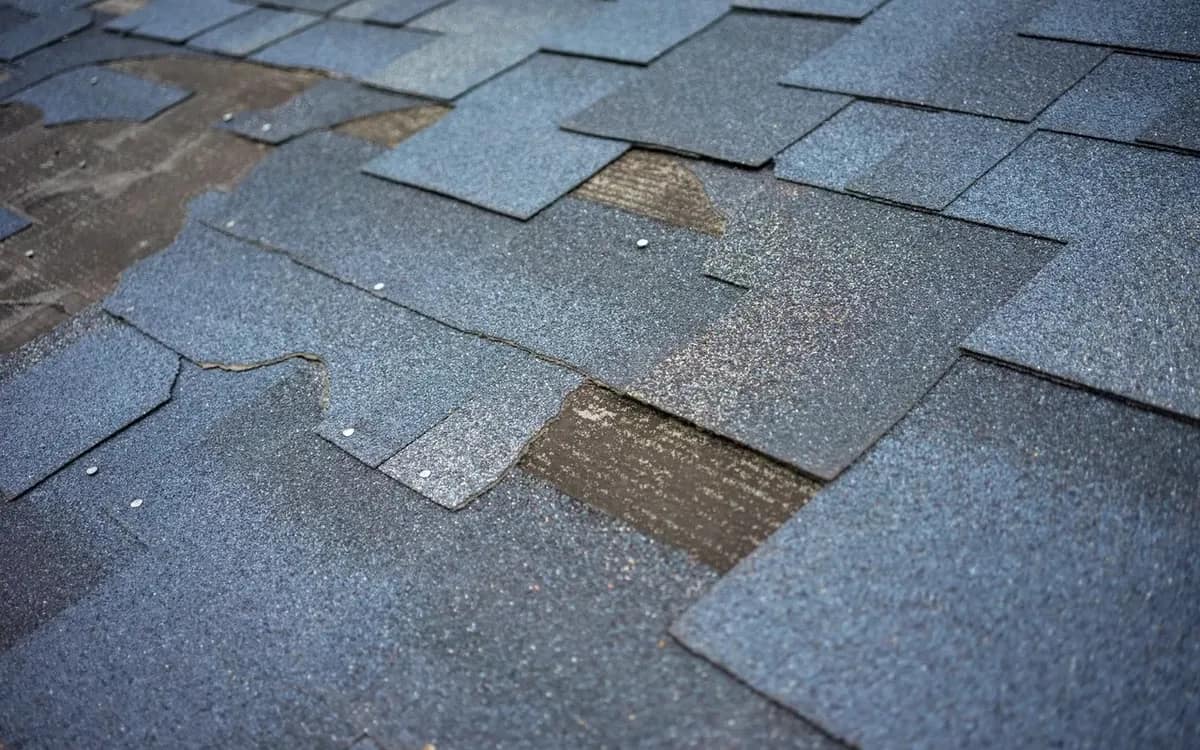 Insurance Claims
Filing a Roof Insurance Claim After a Gulf Coast Storm
What actually happens between a storm hitting your roof and a check clearing — the order of operations, the paperwork, and the honest timeline.
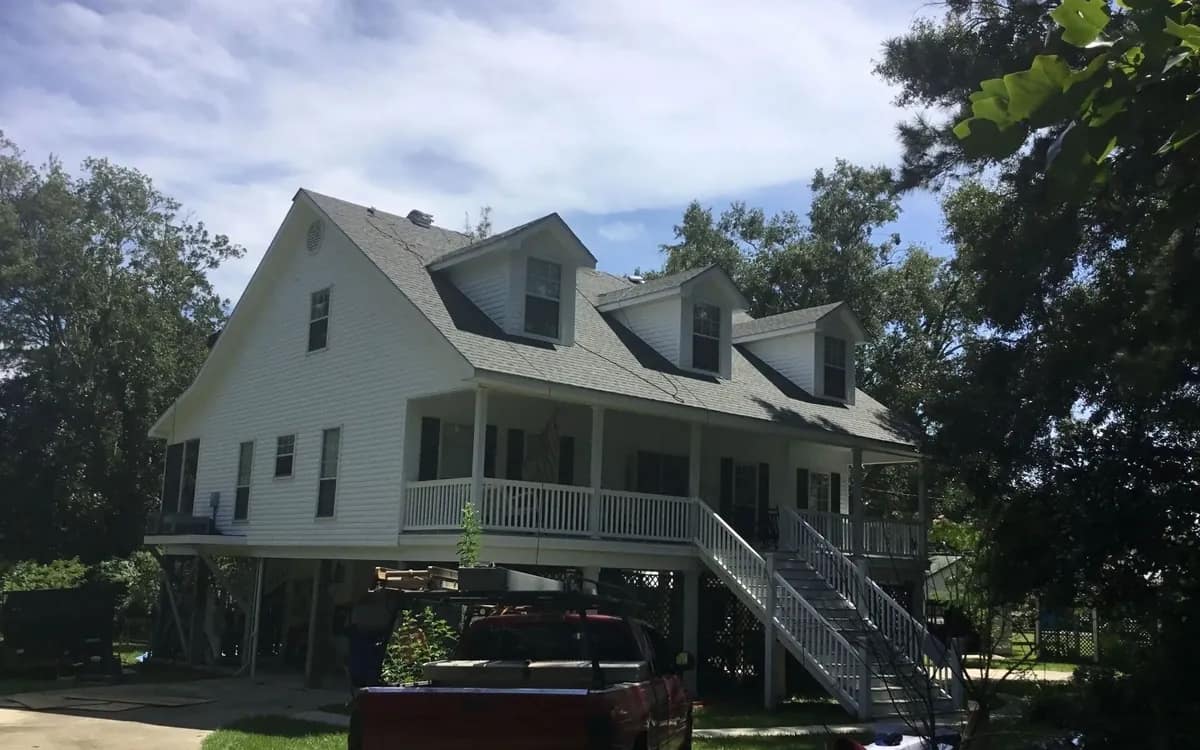 Storm Preparedness
Should You Replace Your Roof Before Hurricane Season?
Waiting until after a storm to replace a worn roof usually costs more time and more stress, not less. The honest read on Gulf Coast timing.
 Local
LocalRoof Permits in Baldwin County vs Mobile County
Who issues your re-roof permit depends on your address, not your county. Here's which office governs, what each asks for, and why Mobile wants photos.
Free inspection · no obligation
Want someone to actually look at your roof?
Free inspection anywhere in Baldwin or Mobile County. We climb it, photograph it, and tell you plainly what we found — then put it in writing.
Licensed Alabama roofing contractor #7430. Free estimates across Baldwin and Mobile County.
Loading the quote form…