
Building Code vs FORTIFIED in Baldwin and Mobile County
Local code already borrows from wind-resistant construction. Here's where it overlaps with FORTIFIED, where it stops, and why code alone earns no discount.
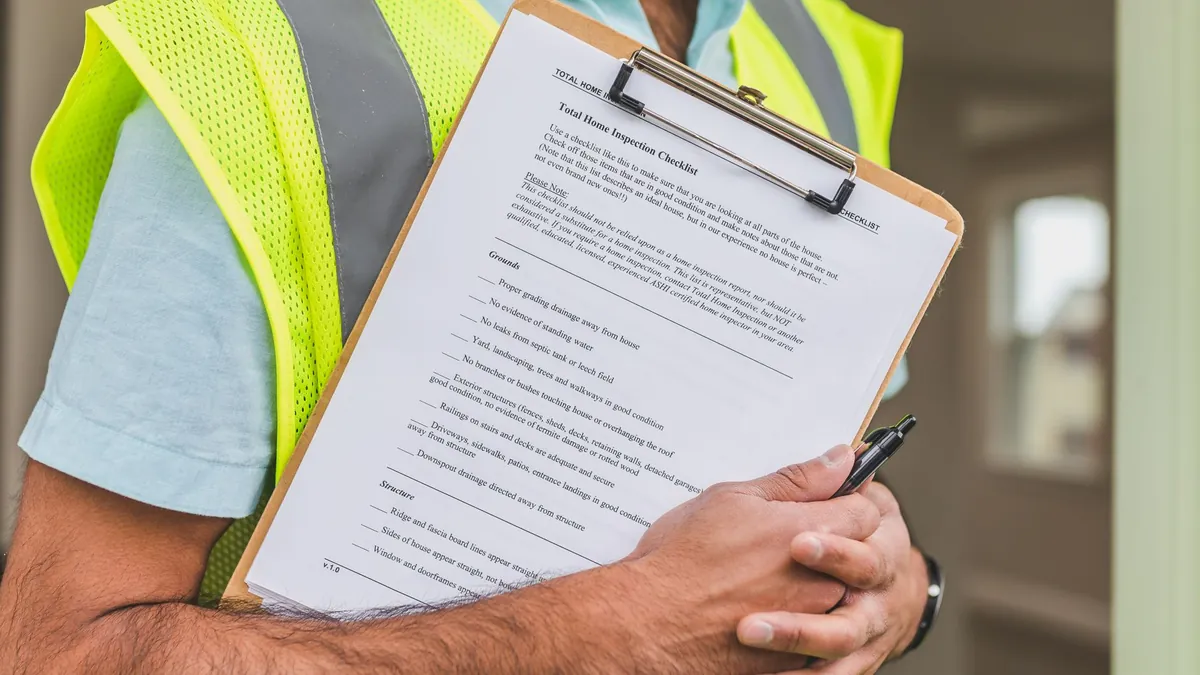
Local building code on this coast already borrows heavily from wind-resistant construction, which is why homeowners reasonably ask whether a FORTIFIED roof is just a code roof with a certificate stapled to it. It is not, and the gap is narrower than the marketing suggests but wider than it looks from the driveway. Code sets a legal minimum for the structure. FORTIFIED sets a voluntary standard above that minimum, and — this is the part that decides the money — it requires an independent party to document the work while it is still visible.
Where the two genuinely overlap
Gulf Coast code did not arrive from nowhere. Mobile County's own history of its inspection program traces the current regime to the aftermath of Hurricane Frederic in 1979, when the County Commission extended the building-permit program past the federal flood-zone boundary to cover the entire unincorporated county, then adopted codes by resolution in 1981 under state authority. The adopted editions have moved forward repeatedly since, including after Katrina.
So on the shared ground — deck fastening schedules, edge attachment, wind-rated coverings — code and FORTIFIED are pointing at the same failure modes, because they were written by people looking at the same storms. A modern code-compliant re-roof in Mobile County or Baldwin County is not a weak roof.
The City of Mobile makes the overlap unusually explicit. Its re-roofing permit application states that initial residential re-roofs must meet the minimum requirements of the Coastal Construction Code supplement, and requires photographs at all intervals of the roof construction, submitted to the city for review before a final inspection can be scheduled. That is a code process borrowing a documentation habit from the mitigation world.
Where the codes actually differ, address by address
The most common local mistake is assuming "the county code" governs your house. It usually does not.
Baldwin County. The county building department's permit jurisdiction covers most unincorporated areas plus the towns of Elberta, Magnolia Springs, and Perdido Beach. Silverhill and Summerdale permit within police jurisdictions that extend past their city limits. Everywhere else inside a municipality, that city's building department governs. The county enforces adopted ICC I-Codes with local amendments and cites the 2024 IRC in its published permit information.
Mobile County. Inspection Services regulates construction in unincorporated Mobile County, with codes and amendments adopted by resolution — the current adoption effective July 1, 2026. Inside the city, Build Mobile runs permitting.
Which means a house in Fairhope, a house in unincorporated Baldwin County near Foley, and a house in Midtown Mobile can be governed by three different departments enforcing three different adopted editions. We break the procedural side down in roof permits in Baldwin County vs Mobile County.
Where code stops
Three gaps matter, and none of them is about a code being weak.
1. Code is a minimum, by design. It is the floor below which construction is not lawful. FORTIFIED is a performance standard aimed at keeping the water out after the wind event, not at defining the legal floor. IBHS publishes it separately for that reason.
2. Code does not produce evidence that survives the shingles. This is the real divide. A FORTIFIED roof requires documentation of the sealed deck and the fastening while the deck is exposed. Once the covering goes on, no inspector on earth can reconstruct what was taped or how the deck was nailed. The evaluator has to be looking at the right moment or the evidence does not exist.
3. Code compliance earns no insurance credit. Alabama's mandated reductions — 35 to 60 percent off the hurricane portion of the premium, 20 to 35 percent off the other-wind portion, under Ala. Code Section 27-31D-2.1 — attach to a designation certificate, not to a passed inspection. A perfectly code-compliant roof with no certificate gets nothing. See the FORTIFIED insurance discount and how carriers apply it.
Does that make code compliance pointless?
The opposite. Code compliance is what makes the FORTIFIED path affordable, because a lot of the structural groundwork is already required. The incremental step is usually about deck sealing, fastening upgrades, edge metal, and — critically — arranging for an independent evaluator to be in the loop before the tear-off rather than after it.
That sequencing is the whole game. A homeowner who calls after the new roof is on has a good roof and no designation, and no amount of paperwork fixes it retroactively. A homeowner who decides before the tear-off gets both.
The practical checklist before a replacement
- Confirm which department permits your address. County, municipality, or a police-jurisdiction overlap. Ask before quoting, not after.
- Ask which adopted code edition applies. It varies between jurisdictions in this two-county market and it changes over time.
- Decide on FORTIFIED before the tear-off, so the evaluator can be scheduled into the sequence.
- Keep the photographs. Whether or not you pursue a designation, in-progress deck photos are the documentation that makes a future storm claim provable. See the adjuster visit.
- Check what you may already have. If the house was ever sold as FORTIFIED, run it down using how to verify a designation on your own roof.
The full standard and how we build to it is on FORTIFIED roofing, the relationship to the state's grant program is on FORTIFIED vs Strengthen Alabama Homes, and if you just want to know what is on the house right now, that is a roof inspection. Mobile Bay does not care which edition of the code your neighborhood adopted — but your carrier cares very much whether a certificate exists.
Common questions
Questions we get about this
Does building to code mean my roof is FORTIFIED?
No. Code is the legal minimum a roof must meet to pass inspection. FORTIFIED is a voluntary standard published by IBHS that sits above code, and a designation only exists after an independent FORTIFIED evaluator documents the work and IBHS issues a certificate. A roof can pass every local inspection and still have no designation, because nobody was there to document it.
Which building codes apply to a re-roof in Baldwin or Mobile County?
It depends on the address, not the county name. Baldwin County's building department enforces adopted ICC I-Codes with local amendments in its jurisdiction, and cites the 2024 IRC in its published permit information. Mobile County Inspection Services adopts and amends its own codes for unincorporated Mobile County, with the current adoption effective July 1, 2026. Inside a city, the municipality's own department governs.
Do inspectors check the same things a FORTIFIED evaluator checks?
There is real overlap on fastening and edge attachment, but the roles are different. A code inspector confirms the work meets the adopted minimum. A FORTIFIED evaluator documents specific evidence against the IBHS standard, including in-progress photographs of the deck before the covering goes on. Once shingles cover the deck, no inspection can reconstruct what was underneath.
Is a FORTIFIED roof worth it if code already requires wind resistance?
In Alabama, that question has a financial answer. The state mandates premium reductions for FORTIFIED homes: 35 to 60 percent off the hurricane portion of the premium and 20 to 35 percent off the other-wind portion, per the Department of Insurance. Code compliance earns none of that, because the credit attaches to the designation certificate rather than to the construction.
Sources
Every non-obvious claim above traces to one of these.
- IBHS — the FORTIFIED Roof standardfortifiedhome.org
- IBHS — frequently asked questions on designationfortifiedhome.org
- Baldwin County Building Department — permit information and adopted code referencesbaldwincountyal.gov
- Baldwin County Building Department — building codes and regulationsbaldwincountyal.gov
- Mobile County Inspection Services — adopted codes and amendment historymobilecountyal.gov
- City of Mobile (Build Mobile) — re-roofing permit applicationbuildmobile.org
- Alabama Department of Insurance — mandated FORTIFIED premium discounts (Ala. Code 27-31D-2.1)aldoi.gov
Keep reading
 FORTIFIED
What Your Agent Needs After a FORTIFIED Roof
The certificate does not apply itself. What to send your insurance agent after a FORTIFIED roof, and how to confirm the Alabama credit landed.
 FORTIFIED
FORTIFIED Roof, Silver, or Gold: Which Level Fits
FORTIFIED has three levels. What Roof, Silver, and Gold each cover, and which one an existing coastal Alabama home can realistically reach.
 FORTIFIED
How to Verify a FORTIFIED Designation on Your Own Roof
Told your roof is FORTIFIED? Here's how to confirm the designation yourself, where the certificate lives, and what to do when nobody can produce one.
Free inspection · no obligation
Want someone to actually look at your roof?
Free inspection anywhere in Baldwin or Mobile County. We climb it, photograph it, and tell you plainly what we found — then put it in writing.
Licensed Alabama roofing contractor #7430. Free estimates across Baldwin and Mobile County.
Loading the quote form…