How to Verify a FORTIFIED Designation on Your Own Roof
Told your roof is FORTIFIED? Here's how to confirm the designation yourself, where the certificate lives, and what to do when nobody can produce one.
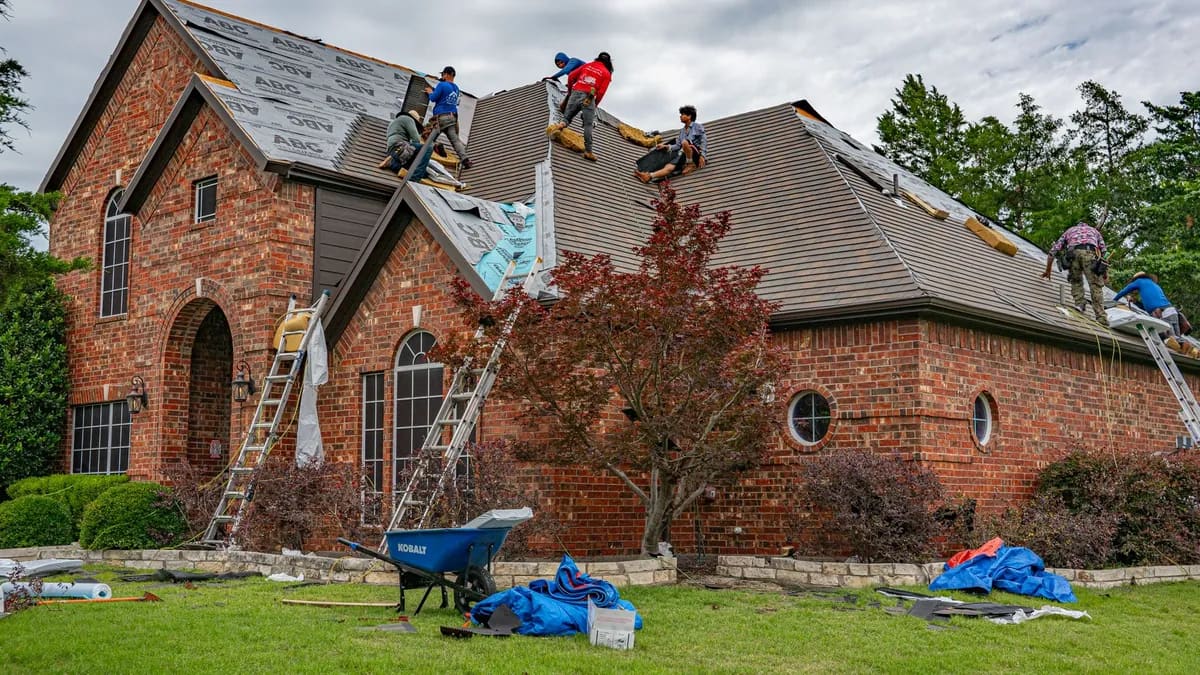
A FORTIFIED designation is a document, not a description. If a seller, a builder, or a previous owner told you the roof is FORTIFIED, the only way to confirm it is to put your hands on the designation certificate issued through the Insurance Institute for Business and Home Safety. If nobody can produce one, the honest answer is that the roof is not designated — whatever the listing said, and whatever the neighbors believe about the subdivision.
That matters more here than almost anywhere else in the country. On the eastern shore of Mobile Bay, in the neighborhoods on the bluffs above Fairhope, and across Baldwin County and Mobile County generally, the designation is worth real money on a wind premium every single year. Here is how to run it down.
What a FORTIFIED designation actually is
FORTIFIED is a construction standard published by IBHS, a research organization funded by the insurance industry. The roof-level designation covers the parts of a roof that fail first in a Gulf Coast wind event: the sealed roof deck, the fastening schedule, the edge metal, and the attachment of everything at the perimeter.
The important part for a homeowner is the paperwork trail. A contractor builds to the standard and photographs the work in progress. An independent FORTIFIED evaluator — a separate party, not the roofer — inspects and documents it. IBHS reviews the evidence and issues a designation certificate with an identifying number and an expiration date. Three parties, one document. We walk through the full standard on our FORTIFIED roofing page.
Why does it matter whether the paper exists?
Because in Alabama the discount is written into law, and carriers apply it from the certificate — not from a description of the roof.
The Alabama Department of Insurance publishes the mandated reductions: 35 to 60 percent off the hurricane portion of the premium, and 20 to 35 percent off the other-wind portion, under Ala. Code Section 27-31D-2.1. Those are percentages of the wind portion of your bill, not the whole policy, which is why two houses with the same designation can see different dollar outcomes. We break that down on the FORTIFIED insurance discount page, and carrier-by-carrier on how the discounts vary between insurers.
No certificate on file, no credit. It really is that mechanical.
Step 1 — Search the paperwork you already have
Before you call anyone, check three places:
- The closing package. New-construction closings on this coast often include the designation certificate as an attachment.
- The builder's warranty binder. If the home was sold as FORTIFIED, the documentation usually rode along with the binder.
- Your insurance file. If a prior owner ever claimed the credit, the carrier has the certificate.
Read the whole document, not the header. You are looking for the designation level, the date it was issued, and the expiration. FORTIFIED roof designations have to be re-designated through IBHS to stay current, and an expired certificate is a common and completely fixable surprise.
Step 2 — Ask IBHS for a copy
If the document is gone, go to the source. IBHS runs a certificate request process for exactly this situation — a homeowner who owns a designated home and does not have the paper. Give them the property address and let them look.
If IBHS has no record for the address, that is your answer. It is not a paperwork problem; it means the home was never designated.
Step 3 — Check who did the work
FORTIFIED providers — evaluators and contractors enrolled in the program — are listed in the official FORTIFIED directory. You can search a company and read its compliance status yourself, in about a minute, without asking anyone's permission. We explain how to read that record on verify your roofer, and the same skepticism applies to state licensing — see how to check an Alabama roofing license.
Step 4 — Confirm the credit is actually applied
Owning a certificate and having the credit on your policy are two different things. Call your carrier, ask whether a FORTIFIED credit is currently applied to the wind portion of your premium, and ask what documentation they have on file. Homeowners find out the certificate never made it to the underwriter more often than you would expect.
While you have them on the phone, it is worth asking what they have recorded as the age of the roof. That single field drives more coastal underwriting decisions than any other — see roof age and insurance and what a non-renewal timeline looks like.
What if the roof turns out not to be designated?
Then you have a decision rather than a problem. A roof cannot be designated retroactively on paper — it earns the designation through evaluation and, usually, through work. The practical path is a real inspection to find out what the roof is, what it would take to build to the standard at the next replacement, and whether the state's mitigation programs apply to your situation. Start with what a roof inspection covers, then read the Alabama grant program and how the grant and FORTIFIED relate to each other.
Why this is worth checking at all
Because the question has been litigated locally. In November 2021 a mass action was filed in Baldwin County Circuit Court by homeowners against national homebuilder D.R. Horton under the Alabama Deceptive Trade Practices Act. NBC 15 reported the action as 88 homeowners across more than 60 Baldwin County homes built between 2015 and 2021; Lagniappe reported in January 2022 that the court had denied the homeowners' request for an injunction, with the case continuing. Both outlets reported that D.R. Horton did not respond to their requests for comment.
Those are allegations made in a civil complaint. As of our last check on 2026-08-18 we located no public record adjudicating them, and nothing here should be read as a finding that any party did anything wrong. We raise it for one reason only: a FORTIFIED claim is checkable, and it is worth checking.
Where we fit
Liberty Roofing is a licensed Alabama roofing contractor. We build roofs, we document what we build, and we can tell you what your existing roof is. We do not issue designations, we are not the evaluator, and we do not decide what your carrier credits. If you want to know what you actually have on the house before hurricane season gets serious, that starts with a look at the roof — get in touch.
Common questions
Questions we get about this
How do I find out if my roof is FORTIFIED?
Look for the FORTIFIED designation certificate first — in your closing package, your builder's warranty binder, or your insurance file. If nobody can produce it, request a copy through the IBHS certificate-request form on fortifiedhome.org. A designation that has no certificate behind it is not a designation, no matter what the listing said.
Does a FORTIFIED roof really lower my insurance in Alabama?
Alabama law requires insurers to give premium credits for FORTIFIED homes. Per the Alabama Department of Insurance, the mandated reductions run 35 to 60 percent on the hurricane portion of the premium and 20 to 35 percent on the other-wind portion (Ala. Code Section 27-31D-2.1). Those percentages apply to the wind portion of your bill, not the whole policy.
Does a FORTIFIED designation expire?
Yes. FORTIFIED roof designations carry an expiration and have to be re-designated through the IBHS process to stay current. A certificate from several years ago may show a date that has already passed, which is one of the first things to check once you have the document in hand.
Can a roofer just declare my existing roof FORTIFIED?
No. Designation comes from IBHS after an independent FORTIFIED evaluator inspects and documents the roof against the standard. A contractor builds to the standard and supplies the documentation; the evaluator and IBHS decide whether the roof earns the designation. Anyone telling you they can designate your roof themselves is describing something the program does not allow.
Sources
Every non-obvious claim above traces to one of these.
- IBHS — FORTIFIED Roof standardfortifiedhome.org
- IBHS — FORTIFIED certificate requestfortifiedhome.org
- IBHS — FORTIFIED re-designationfortifiedhome.org
- Official FORTIFIED provider directoryfortified.profilegorilla.com
- Alabama Department of Insurance — mandated FORTIFIED premium discounts (Ala. Code 27-31D-2.1)aldoi.gov
- NBC 15 (WPMI, Mobile) — Baldwin County homeowners' mass action against D.R. Hortonmynbc15.com
- Lagniappe (Mobile) — reporting on the same actionlagniappemobile.com
Keep reading
 FORTIFIED
Building Code vs FORTIFIED in Baldwin and Mobile County
Local code already borrows from wind-resistant construction. Here's where it overlaps with FORTIFIED, where it stops, and why code alone earns no discount.
 FORTIFIED
Does a FORTIFIED Designation Transfer to a Buyer?
A FORTIFIED designation belongs to the address, not the owner. What transfers at closing, what a buyer should verify, and what can lapse.
 FORTIFIED
What Your Agent Needs After a FORTIFIED Roof
The certificate does not apply itself. What to send your insurance agent after a FORTIFIED roof, and how to confirm the Alabama credit landed.
Free inspection · no obligation
Want someone to actually look at your roof?
Free inspection anywhere in Baldwin or Mobile County. We climb it, photograph it, and tell you plainly what we found — then put it in writing.
Licensed Alabama roofing contractor #7430. Free estimates across Baldwin and Mobile County.
Loading the quote form…