
FORTIFIED Roof, Silver, or Gold: Which Level Fits
FORTIFIED has three levels. What Roof, Silver, and Gold each cover, and which one an existing coastal Alabama home can realistically reach.
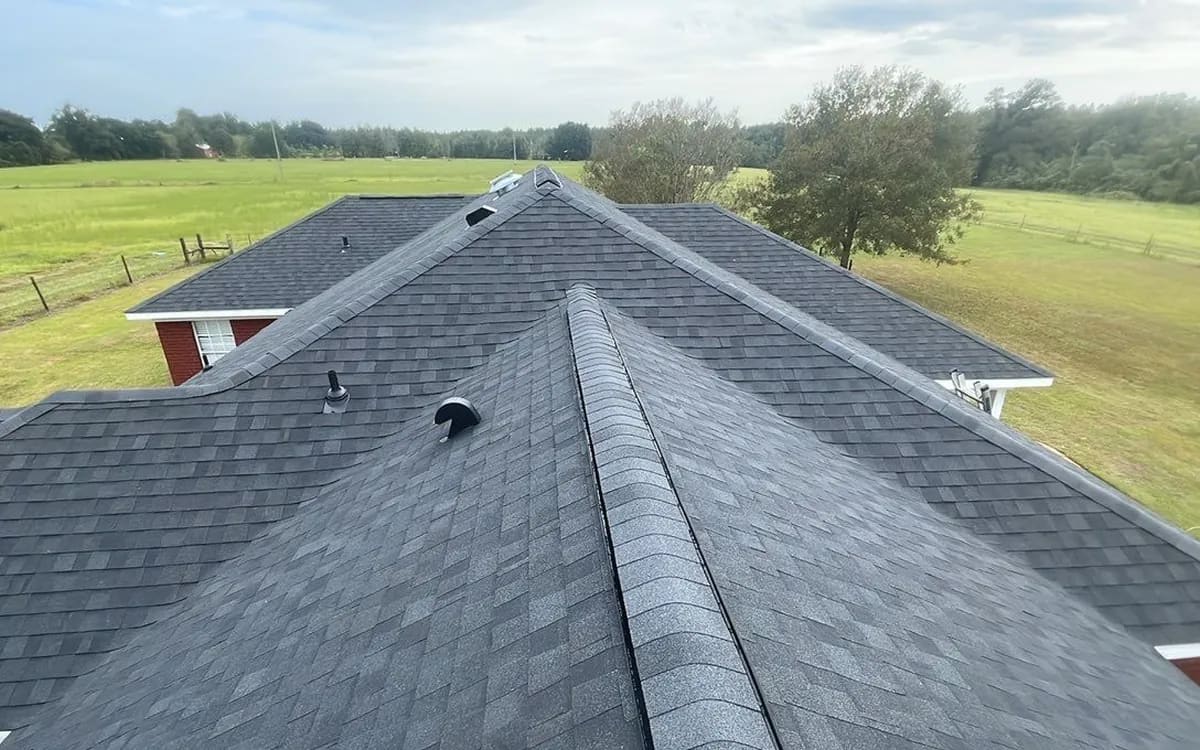
FORTIFIED comes in three levels, and for most existing homes on the Gulf Coast only one of them is realistically on the table. FORTIFIED Roof covers the roof itself. Silver adds the openings and attached structures. Gold adds a continuous load path from the roof down to the foundation. If you are re-roofing a house in Baldwin County or Mobile County, you are almost certainly aiming at FORTIFIED Roof, and the other two levels are decisions for a different project on a different day.
The three levels, in plain terms
FORTIFIED Roof is the entry level and the one nearly every existing coastal home starts with. It targets the roof as a system: the decking, how that decking is fastened to the framing, what happens at the edges, and whether water still gets into the house after the shingles are gone. It is the level a re-roof can reach without touching the rest of the structure.
FORTIFIED Silver includes everything in Roof and then treats the house as a pressurized box rather than a lid on a building. Gable ends, soffits, chimneys, attached porches and carports all come into scope, because those are the places wind finds a way inside once the roof holds.
FORTIFIED Gold includes everything in Silver and adds the continuous load path — the engineered chain of connections that ties the roof through the walls and down to the foundation. Gold is the strongest designation and generally the largest project.
Every level is cumulative. You cannot skip to Gold; you build up through them. That is why the sequencing question matters more than the ambition question, and why the honest answer for most homeowners is "start at the roof."
Which level is realistic for an existing house?
For a house that already exists on the eastern shore of Mobile Bay, in Fairhope or anywhere else along this coast, the answer is almost always FORTIFIED Roof.
The reason is timing, not ambition. A re-roof already opens the deck, already touches the edge metal, already replaces the covering. Reaching the roof designation means doing that work to a documented standard instead of to code minimum. Silver and Gold require work that a roofing project does not naturally expose — retrofitting gable-end bracing, upgrading soffits, or installing connectors that live inside the wall assembly. Those are real projects with their own trades and their own budgets.
If you are building new, the calculus changes completely. On new construction the incremental cost of the load path is a fraction of what it costs to retrofit later, and Silver or Gold is worth a serious conversation with your builder before framing starts.
What the roof level actually requires
The requirements are published by the Insurance Institute for Business & Home Safety, and the short version is four things plus proof.
- A sealed roof deck. The seams in the decking are sealed and the deck gets a full secondary water barrier, so a house that loses shingles still does not take water. This is the single biggest reason FORTIFIED roofs come through storms with dry ceilings, and it is worth its own read in what a sealed roof deck is and why it wins storms.
- Stronger deck attachment. The decking is fastened to the framing on an upgraded schedule, which determines how much uplift the roof takes before it starts to peel.
- Enhanced edges. Drip edge and edge metal are upgraded and fastened tighter along every edge, because wind gets under a roof at the edge first.
- Wind-rated covering and detailing. The covering, ridge and hip details, vents, and pipe penetrations all have to be rated and detailed for the wind zone the house sits in.
Then there is the part homeowners underestimate: documentation. The standard is proven with photographs and product data captured while the roof is open, then reviewed by an independent third-party FORTIFIED Evaluator. Evaluators are not roofers and roofers are not evaluators — that separation is the whole reason the certificate means anything. Work that was not documented while the deck was open cannot be designated after the fact, no matter how well it was built.
What the level does for your insurance
Alabama law requires insurers to discount the hurricane portion of a premium by 35–60% and the other-wind portion by 20–35% for a home with a FORTIFIED designation (Ala. Code § 27-31D-2.1; Alabama Department of Insurance). Read those as percentages of portions of a premium, not of your whole bill. Where you land inside those ranges depends on your carrier, your designation level, your construction, and how close to the water you sit — which is why the same certificate is worth more in Gulf Shores than it is thirty miles inland.
We do not sell insurance and we will not tell you what your policy will do. The mechanics, including how carriers differ, are laid out on the FORTIFIED insurance discount page, and the paperwork side is covered in what your agent needs after the certificate arrives.
Where the state grant fits, and where Liberty stands
Strengthen Alabama Homes is a state grant program that pays toward a roof built to this standard. It is a source of money, not a set of requirements, and the two get compressed into one phrase constantly. Liberty Roofing holds the FORTIFIED credential and is not a Strengthen Alabama Homes program contractor — we are not on the state's approved-contractor list and we do not perform grant-funded work. If the grant is your path, you need a roofer from that list, and the difference between the standard and the program is worth ten minutes before you apply.
Our own credential is public and you should check it rather than take our word: in the FORTIFIED Verify a Pro directory, Liberty Roofing Company Inc is company 011483 with a status of Compliant, and Dane DeValk is listed as a credentialed provider, ID R011603, Designation: Roofer, Status: Active (read live 2026-08-17). Here is how to verify any roofer's credential in about thirty seconds.
Deciding, without overthinking it
Pick the roof level if your roof is the thing that is due. Pick Silver or Gold if you are building new, doing a gut renovation, or you have already designated the roof and want to keep going. Do not let a Gold-shaped ambition delay a roof that needs replacing this year — the roof is the part that fails first, and it is the part with a certificate attached.
Start with an honest look at what you have. A roof inspection tells you whether your deck is even a candidate before you spend money on an evaluation, and the FORTIFIED overview covers the standard end to end.
Common questions
Questions we get about this
What is the difference between FORTIFIED Roof, Silver, and Gold?
FORTIFIED Roof addresses the roof by itself — the deck, how the deck is attached, the edges, and keeping water out once the covering is gone. Silver includes everything in Roof and adds the openings and attached structures, such as gable ends, soffits, chimneys, and attached porches or carports. Gold includes everything in Silver and adds a continuous load path, the engineered chain of connections tying the roof through the walls down to the foundation. Each level is a superset of the one before it.
Can I get FORTIFIED Silver or Gold during a normal re-roof?
Usually not. A re-roof is the natural moment to reach FORTIFIED Roof, because the work happens at the deck and the edges anyway. Silver and Gold reach past the roof into openings, attached structures, and the load path through the walls, which is a different scope of construction. Most Gulf Coast homeowners designate at the roof level during a re-roof and treat Silver or Gold as a separate future project.
Do all three levels get the same Alabama insurance discount?
No. Alabama requires insurers to credit a designated home, but the credit is not one flat number — where you land in the mandated range depends on your carrier, your designation level, your construction, and your location relative to the water. Higher designation levels generally sit higher in the range. Ask your agent what your specific policy does before you choose a level based on the insurance math alone.
Does the designation expire?
Yes. Designations run on a renewal cycle — five years for a roof designation — after which the home has to be re-evaluated to stay current. Put the expiration date on a calendar the day the certificate arrives. An expired designation is the quiet way homeowners lose a premium credit they already paid to earn.
Sources
Every non-obvious claim above traces to one of these.
- IBHS — the FORTIFIED Roof standardfortifiedhome.org
- IBHS — FORTIFIED program homefortifiedhome.org
- Alabama Department of Insurance — mandated FORTIFIED premium creditsaldoi.gov
- FORTIFIED Verify a Pro directoryfortified.profilegorilla.com
Keep reading
 FORTIFIED
Does a FORTIFIED Designation Transfer to a Buyer?
A FORTIFIED designation belongs to the address, not the owner. What transfers at closing, what a buyer should verify, and what can lapse.
 FORTIFIED
What Your Agent Needs After a FORTIFIED Roof
The certificate does not apply itself. What to send your insurance agent after a FORTIFIED roof, and how to confirm the Alabama credit landed.
 FORTIFIED
Building Code vs FORTIFIED in Baldwin and Mobile County
Local code already borrows from wind-resistant construction. Here's where it overlaps with FORTIFIED, where it stops, and why code alone earns no discount.
Free inspection · no obligation
Want someone to actually look at your roof?
Free inspection anywhere in Baldwin or Mobile County. We climb it, photograph it, and tell you plainly what we found — then put it in writing.
Licensed Alabama roofing contractor #7430. Free estimates across Baldwin and Mobile County.
Loading the quote form…