
The Sealed Roof Deck, Explained for the Gulf Coast
A sealed roof deck keeps water out after the shingles are gone. What it is, how it is built, and why it is the hardening step to spend on.
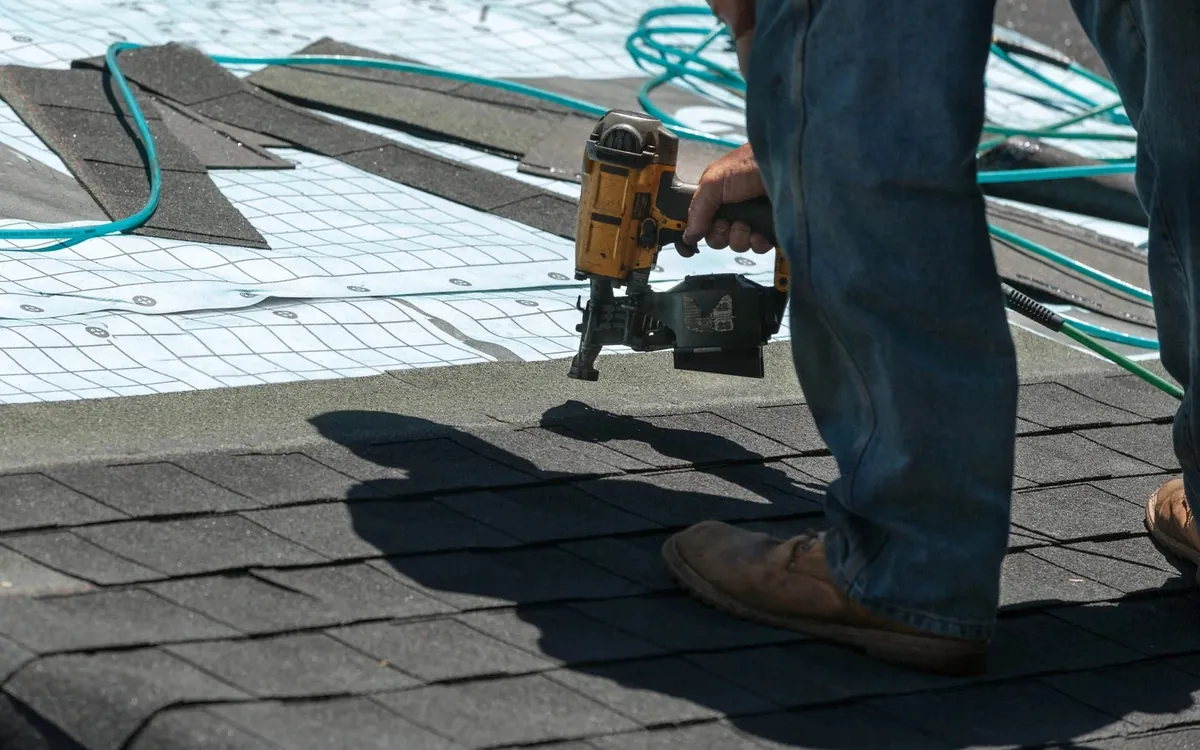
If you only harden one thing about your roof, harden the deck. A sealed roof deck means the seams between the decking panels are sealed and the whole deck gets a continuous secondary water barrier before the covering goes on. It does not stop shingles from blowing off. It stops the house from filling with water when they do — which, on the Gulf Coast, is where almost all of the real loss actually happens.
Why the deck is where the damage is decided
The failure pattern after a coastal storm is boringly consistent. Wind lifts the covering. The covering leaves. Then rain falls for hours onto bare decking with open seams, and the water runs through those seams into the attic, the insulation, the drywall, and eventually the floors.
The wind event lasts a few hours. The water event lasts as long as the tarp does. Homes across Baldwin County and Mobile County have been lost from the inside out long after the wind quit, and the difference between a repair and a rebuild is very often whether the deck underneath was doing anything.
That is why the standard treats the sealed deck as the anchor requirement rather than a nice extra. The Insurance Institute for Business & Home Safety built the FORTIFIED program around real post-storm damage surveys, and the sealed deck is the single change with the largest effect on whether a house is habitable a week later.
How a sealed deck is actually built
There is no mystery to it, but there is craft in it.
- Tear off to bare decking. You cannot seal what you cannot see. Soft, delaminated, or water-stained panels get replaced now, not covered up.
- Re-fasten the decking. Deck attachment and deck sealing are separate requirements, and they are done at the same moment because the deck is open. An upgraded fastening schedule is what determines how much uplift the deck takes before it peels.
- Seal every seam. Each joint between panels gets sealed, which is what turns a field of separate sheets into something closer to a continuous surface.
- Run a full secondary water barrier. The whole deck gets covered, edge to edge, with a barrier rated to keep working after the covering is gone.
- Detail the penetrations. Pipe boots, vents, and anything else coming through the deck get detailed so the barrier is continuous around them rather than interrupted by them.
- Document it while it is open. Photographs and product data are captured during the work, because none of this is visible or verifiable once the shingles are down.
That last step is the one homeowners skip past, and it is the one that decides whether the work can ever be designated. An independent third-party FORTIFIED Evaluator — hired by you, not by your roofer — reviews that documentation against the published standard. Roofers do not certify their own roofs, which is exactly the point of the separation.
Does it actually change anything in a real storm?
Consider the storms this coast has already taken. NOAA's HURDAT2 best-track record puts 52 named systems within 100 miles of Mobile Bay since 1950, 14 of them at hurricane strength near the bay. Ivan came within about 12 miles of the bay in 2004 as a Category 3 at closest approach, with a peak of Category 5 out over water. Sally came within about 18 miles in 2020 as a Category 2 and sat over the coast, which is the part homeowners here remember — it was not the fastest storm, it was the wettest and the slowest.
A slow storm is precisely the case a sealed deck is built for. Homeowners from Daphne down to Orange Beach did not lose their ceilings to gusts; they lost them to thirty hours of rain landing on decking that had nothing underneath it. Fast-moving wind takes shingles; a storm that stalls turns an unsealed deck into a sieve for a day and a half. That combination — modest peak wind, enormous rainfall, hours of exposure — is the local hazard profile, and it is documented in the Gulf Coast storm data we keep on this site with its sources attached.
What it costs you, and what it gives back
Sealing a deck is labor and material a standard re-roof does not include. Taping every seam and running a full barrier across the whole surface adds hours, and the upgraded fastening schedule adds more. There is no way around that, and any roofer who tells you it is free is quoting something else.
What comes back is on two ledgers. The insurance ledger is not a sales claim, it is state law: Alabama requires insurers to discount the hurricane portion of a premium by 35–60% and the other-wind portion by 20–35% for a home with a FORTIFIED designation (Ala. Code § 27-31D-2.1; Alabama Department of Insurance). Those are percentages of portions of a premium, not of the whole bill, and your agent owns the actual number. The other ledger has no line item at all — it is the storm where you lose shingles instead of a ceiling.
There is also a state grant program, Strengthen Alabama Homes, that pays toward getting a roof to this standard, and a state mitigation tax credit that sits alongside it. Liberty is FORTIFIED-credentialed and is not a Strengthen Alabama Homes program contractor; we are not on the state's approved-contractor list and we do not perform grant-funded work. If that funding is your route, start with the grant page and the standard-versus-program breakdown. The tax side is covered separately on the roof tax credit page.
Where a sealed deck sits in the order of operations
If you are hardening an older house piece by piece, the deck comes first, the edges come next, and the covering comes last. That order is not arbitrary — it follows the way water actually gets in. Hardening an older coastal roof in the right order walks the full sequence, and the FORTIFIED overview covers where the deck fits in the designation as a whole.
If your roof is close to due, the practical move is to have someone look at the decking before you decide anything. A roof inspection tells you whether the deck you have is worth sealing or has already gone soft in places, and that single answer usually settles the timing question by itself. When the deck is the reason you are re-roofing, roof replacement is the conversation to have.
Common questions
Questions we get about this
What is a sealed roof deck?
A sealed roof deck is decking whose seams have been sealed and which then receives a full secondary water barrier across the entire surface before the covering goes on. The point is that the deck itself sheds water. If wind strips the shingles off in a storm, the house underneath still stays dry instead of taking water through every seam in the plywood.
Is a sealed roof deck the same as underlayment?
Not quite. Every roof has some underlayment. A sealed deck specifically seals the seams between decking panels and adds a continuous secondary water barrier designed to keep working after the covering is gone. Standard felt laid loose over unsealed seams is not a sealed deck, and it will not perform like one once the shingles leave.
Can a sealed deck be added without replacing the whole roof?
In practice, no. Sealing the deck means working directly on the decking, which means the covering has to come off. That is why a re-roof is the moment to do it — the work happens while the deck is already open and the incremental cost is far lower than tearing off a sound roof later just to seal underneath it.
Does a sealed deck stop wind from taking my shingles?
No, and it is not meant to. Deck attachment and edge detailing are what resist uplift. A sealed deck is the second line: it assumes the covering may fail and makes sure that failure costs you shingles rather than ceilings, insulation, drywall, flooring, and everything the water reaches on the way down.
Sources
Every non-obvious claim above traces to one of these.
- IBHS — the FORTIFIED Roof standardfortifiedhome.org
- NOAA HURDAT2 Atlantic best-track databasenhc.noaa.gov
- Alabama Department of Insurance — mandated FORTIFIED premium creditsaldoi.gov
Keep reading
 Storm Preparedness
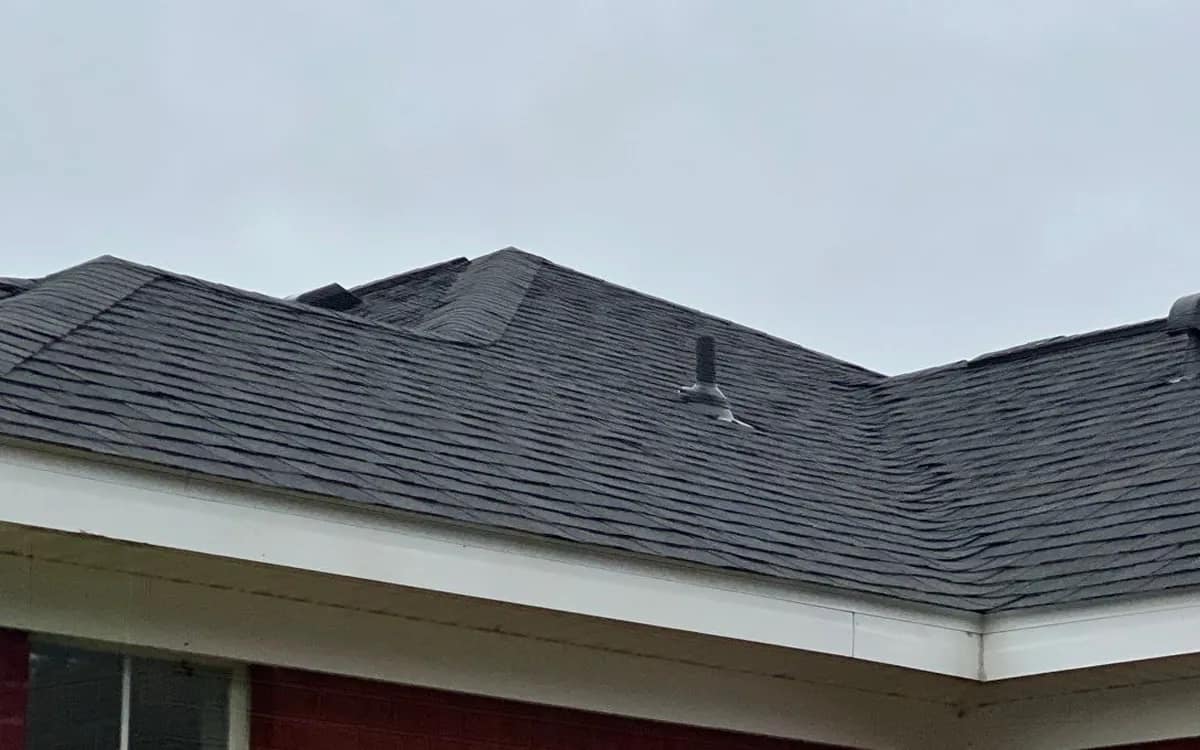
Why Gulf Coast Wind Takes Your Roof Edge First
Hurricane wind starts at the roof edge, not the middle. What drip edge, edge metal, and starter courses actually do in a coastal storm.
 Storm Preparedness
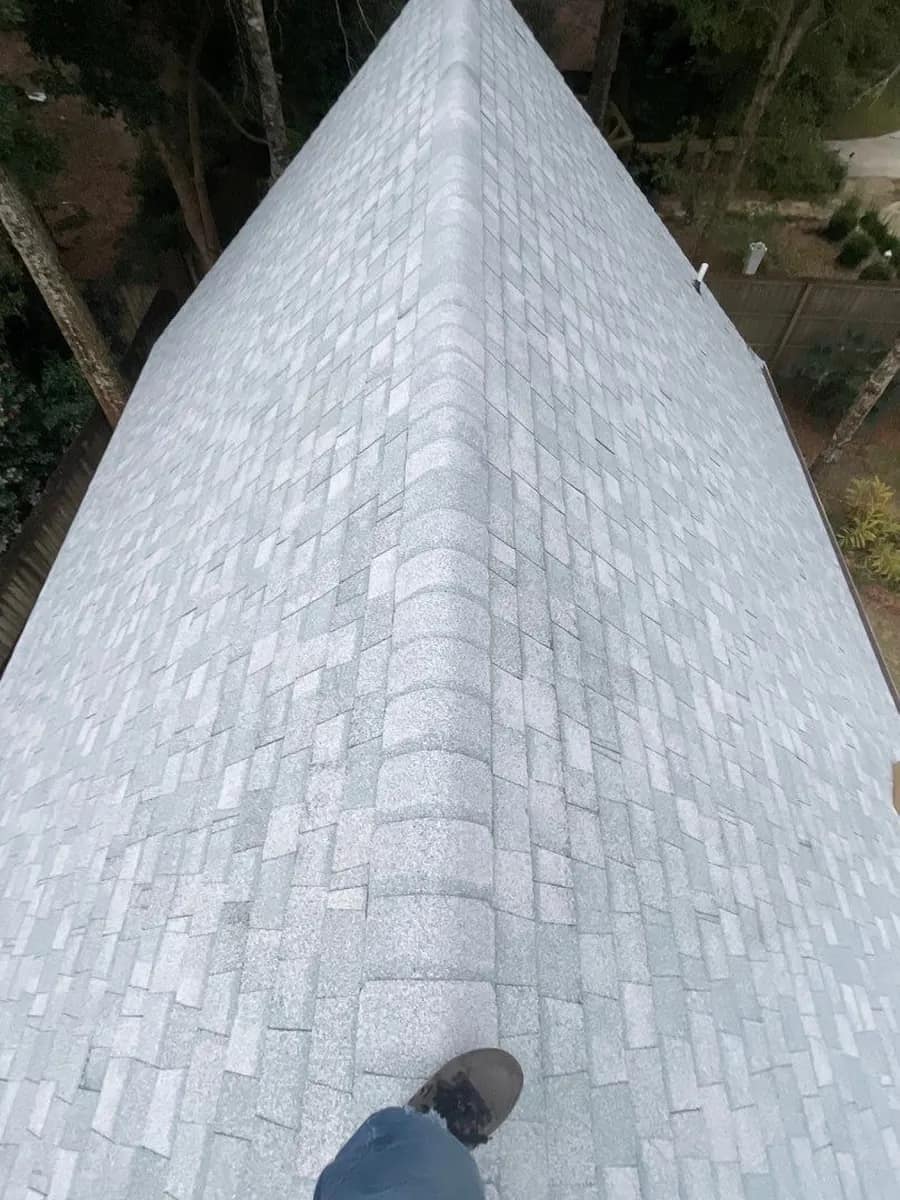
A Pre-Hurricane-Season Roof Check for the Coast
What to check on a coastal Alabama roof before a storm is named, what to photograph now, and why pre-season work beats post-storm work.
 Storm Preparedness
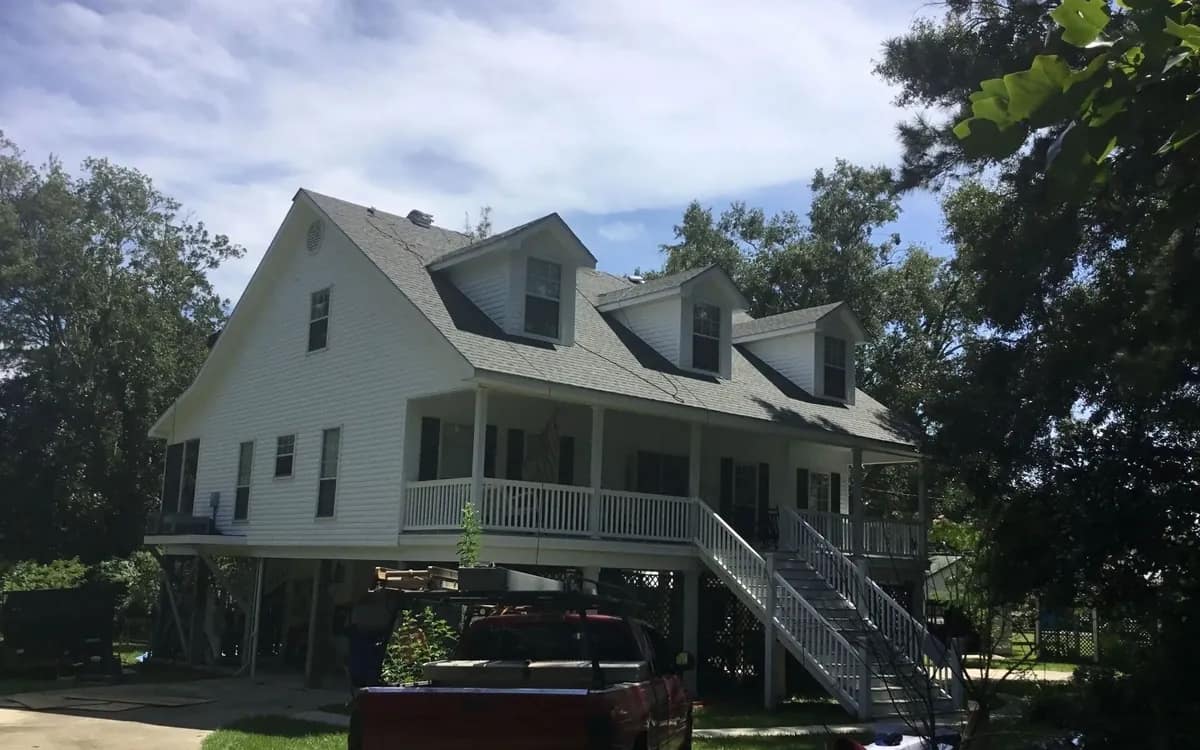
Should You Replace Your Roof Before Hurricane Season?
Waiting until after a storm to replace a worn roof usually costs more time and more stress, not less. The honest read on Gulf Coast timing.
Free inspection · no obligation
Want someone to actually look at your roof?
Free inspection anywhere in Baldwin or Mobile County. We climb it, photograph it, and tell you plainly what we found — then put it in writing.
Licensed Alabama roofing contractor #7430. Free estimates across Baldwin and Mobile County.
Loading the quote form…