
Impact-Resistant Shingles and Your Homeowners Insurance
What a Class 4 impact rating actually tests, how it differs from a wind rating, and why an insurance discount for it is never guaranteed.
"Impact-resistant" on a shingle label almost always means a Class 4 rating under UL 2218, a standardized test that drops steel balls of increasing size onto a shingle to simulate hail impact — Class 4 is the highest of four classes in that test. It's a real, independently tested rating, but it's a hail-resistance rating specifically, not a wind rating, and whether it actually lowers your insurance premium depends entirely on your carrier, not on the shingle itself.
What UL 2218 Actually Tests
UL 2218 is a standard developed with input from the roofing industry and insurers, and it works by dropping a steel ball from a set height onto a conditioned shingle sample and checking whether the impact cracks the material. Ball size scales with each class, with Class 4 using the largest ball in the standard, dropped to replicate the kinetic energy of a large hailstone. Cosmetic marking from the impact is expected and allowed; a crack through the shingle mat is a fail.
The Four Classes, and Why Class 4 Is the One People Ask About
UL 2218 rates shingles Class 1 through Class 4, with Class 4 the highest resistance level tested under the standard. Most standard shingles carry no impact rating at all, or a lower class; Class 4 products are typically a distinct, purpose-built product line rather than a base shingle upgraded after the fact.
How Class 4 Options Compare Across Manufacturers
Several major shingle manufacturers publish a Class 4 line within their broader product catalog, and the products differ in more than just impact rating — wind rating, algae resistance, and accessory requirements at the starter course and ridge all vary by manufacturer and by product line within it. Our shingle brand comparison covers those differences directly, including the honest read on where impact class actually ranks against wind rating and algae resistance for a roof on this specific coast. The short version: wind performance is usually the bigger factor here, and impact class is worth evaluating on its own terms rather than assuming it's the headline number.
Does Impact Resistance Affect My Wind Coverage or FORTIFIED Discount?
No — and this is where the confusion usually starts. Impact resistance is a hail-specific rating; Alabama's FORTIFIED wind discount is a separate, state-mandated program tied to wind uplift and structural connection requirements, not hail impact. A roof can carry a Class 4 shingle rating, a FORTIFIED designation, both, or neither — they're evaluated independently, on different criteria. Our FORTIFIED insurance agent checklist covers this same distinction from the paperwork side.
Whether Your Insurance Actually Offers a Credit for It
Some carriers offer a premium credit for impact-resistant roofing; many don't, and among those that do, the terms aren't standardized. This isn't a program Liberty controls or can promise on your behalf — it's a policy-specific question that only your agent or carrier can actually answer, and it's worth asking about by name rather than assuming a Class 4 shingle automatically triggers a discount. Our roof insurance claims guide covers the broader insurance process if a hailstorm is what brought you to this question in the first place.
The Trade-Off: What Class 4 Shingles Cost You Upfront
Class 4 shingles carry a higher material cost than a standard shingle of the same style, since the impact-resistant layer is a real manufacturing difference, not just a label. Whether that difference is worth it depends on how much weight you put on hail resistance specifically versus the other factors that go into a material choice — our architectural vs. 3-tab comparison and metal vs. shingle comparison both cover the wider material decision Class 4 fits into.
Installation Still Determines Whether It Actually Performs
A Class 4 rating describes the shingle itself, tested under laboratory conditions — it says nothing about the flashing, ventilation, and fastening detail that determine whether a real roof on a real house performs the way the lab sample did. A Class 4 shingle installed with the same flashing shortcuts that cause any other roof to leak is still a roof that leaks; the impact rating doesn't travel with the product past the factory. Our manufacturer versus workmanship warranty guide covers the related point that a product's rating and its installation are two separate things, covered by two separate warranties, and evaluated separately when something goes wrong.
What to Ask Your Agent, Specifically
If a Class 4 credit matters to your decision, ask your agent by name whether your specific policy offers an impact-resistant roofing discount, what documentation they require to apply it, and how it interacts with any other roof-related credit already on your policy, including a FORTIFIED designation if you have one. A verbal "probably" from a contractor isn't the same as a written answer from the party actually setting your premium.
Is This Worth It on the Gulf Coast?
Hail is a real but less frequent risk here than in the country's more hail-prone regions — most of the severe-weather roof damage on this coast traces to wind and named storms rather than hail. That doesn't make Class 4 shingles pointless: hail-producing thunderstorms do move through Baldwin and Mobile counties, and a homeowner who values that specific protection, or who's already budgeting for a full replacement or weighing shingle options, has a legitimate reason to ask about it. It's just not a substitute for the wind-focused protections that matter more often on this specific coastline.
Related on our site
Common questions
Questions we get about this
What does 'Class 4 impact resistant' actually mean?
It refers to a shingle's performance under UL 2218, a standardized test that drops steel balls of increasing size onto a shingle to simulate hailstone impacts. Class 4 is the highest rating in that test, meaning the shingle resisted cracking under the largest steel ball used in the standard.
Does a Class 4 shingle mean my insurance goes down automatically?
No. Some carriers offer a premium credit for impact-resistant roofing, but it isn't guaranteed, isn't standardized across companies, and isn't the same program as Alabama's mandated FORTIFIED wind discount. Ask your agent directly whether your specific policy offers one.
Is impact resistance the same thing as wind resistance?
No, and this is where a lot of confusion starts. Impact resistance is about hail; wind rating is about uplift and blow-off resistance in high wind. A shingle can perform well on one and not be specifically marketed for the other, and Alabama's FORTIFIED credit is a wind-and-structure program, not a hail-impact one.
Is hail a real risk on the Gulf Coast?
It's a real but less frequent risk here than in the country's more hail-prone regions. Most of the severe-weather roof damage Liberty sees along the coast traces to wind and named storms rather than hail, but hail-producing thunderstorms do move through Baldwin and Mobile counties, and Class 4 shingles are a legitimate option worth asking about regardless of how often it happens.
Sources
Every non-obvious claim above traces to one of these.
Keep reading
 Insurance Claims
The Non-Renewal Letter: What the Timeline Looks Like
A non-renewal isn't a cancellation, and you have longer than you think. Here's the Alabama notice rules, the real clock, and what to do in which order.
 Insurance Claims
Assignment of Benefits: What You're Actually Signing
An AOB hands your insurance rights to a contractor. Here's what that document does, what Alabama law says about roofers and claims, and how to back out.
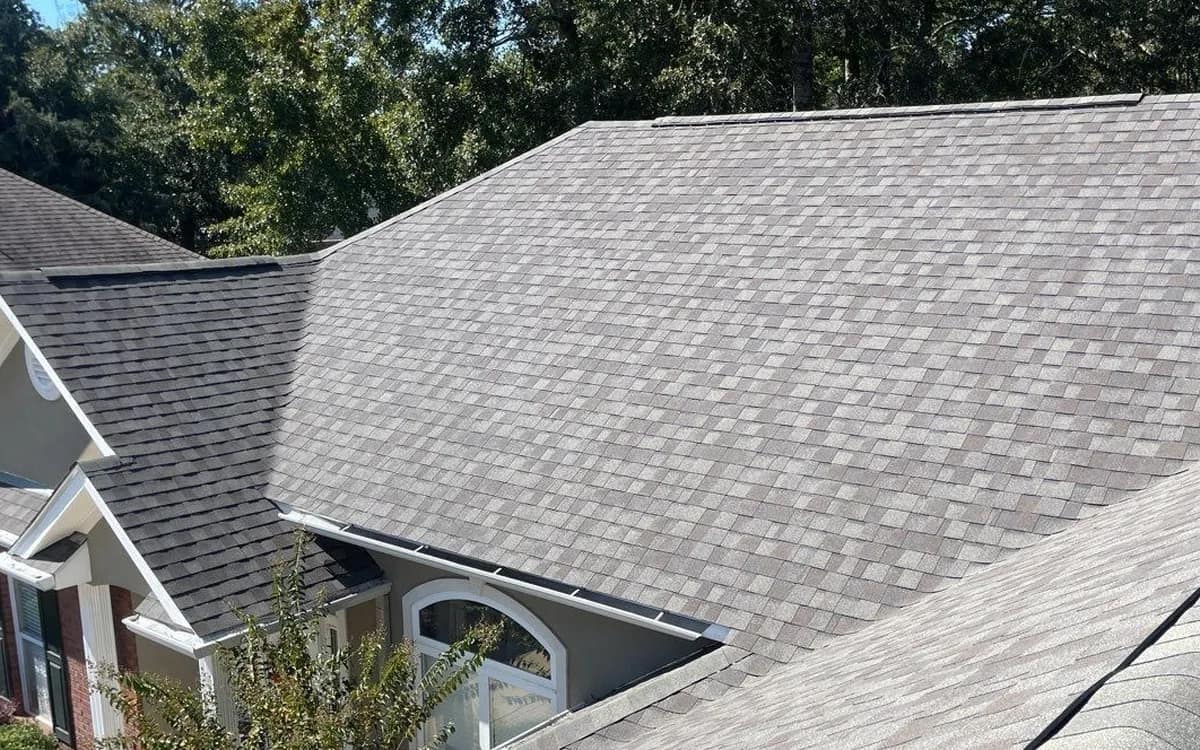 Roofing Materials
Architectural vs. 3-Tab Shingles in Alabama
Architectural or 3-tab shingles for a Gulf Coast roof? Compare wind performance, weight, appearance, and where each one actually makes sense.
Free inspection · no obligation
Want someone to actually look at your roof?
Free inspection anywhere in Baldwin or Mobile County. We climb it, photograph it, and tell you plainly what we found — then put it in writing.
Licensed Alabama roofing contractor #7430. Free estimates across Baldwin and Mobile County.
Loading the quote form…