
Safe Temporary Fixes Before the Roofer Arrives
What you can safely do inside the house while you wait on a roofer, and what to leave alone until someone with a harness gets there.
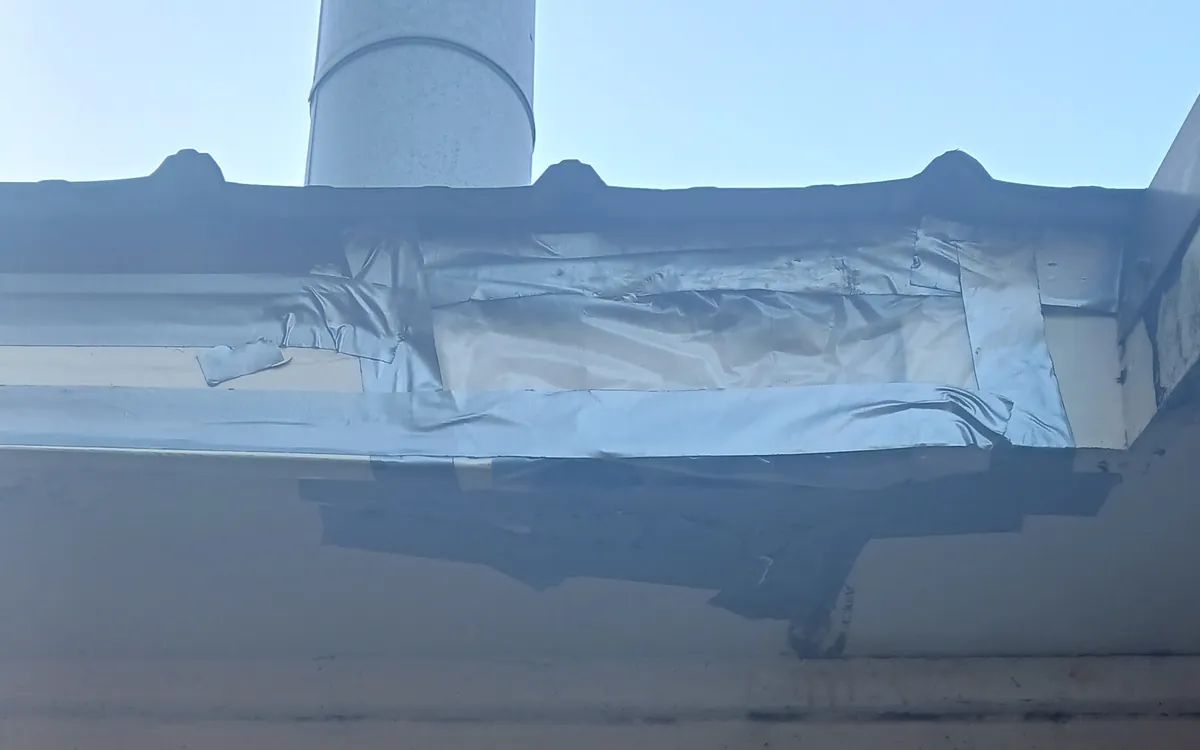
If a storm has opened up your roof or a leak has started running, the safest things you can do right now are all inside the house: contain the water, protect what you can move, and photograph everything before anyone touches it. The roof itself — tarping, patching, anything that means being on a wet or storm-damaged surface — is not a do-it-yourself job, and rushing that part is how a bad day turns into a worse one.
What's actually safe to do yourself
Contain the water. Buckets, towels, a tarp draped over furniture — anything that keeps water off floors and belongings while it finds its way down. If water is pooling on a light fixture or near an outlet, cut power to that circuit at the breaker before you go near it, or leave it and call an electrician if you're not sure which circuit it is.
Move what you can. Furniture, electronics, anything that water will ruin, out of the room that's taking damage. This is the highest-value five minutes you'll spend before help arrives.
Photograph everything. Wide shots of the room, close shots of the damage, timestamped, before anyone starts moving debris or drying things out. This documentation is what a later inspection and insurance claim both lean on.
Watch a bulging ceiling from a distance. Trapped water can make drywall let go all at once. If a section of ceiling is sagging or bowing, move people, pets, and anything valuable out of that room rather than standing underneath it.
What to leave alone until someone qualified gets there
The roof itself is the one part of this list that isn't a homeowner job. A wet or storm-damaged roof is dangerous to walk even for someone experienced, and a tarp that isn't fastened correctly won't just fail to help — it can peel back in the next gust and take more of the roof with it. If you're standing at the bottom of a ladder wondering whether to climb up, that's the moment to put the ladder away and make a call instead.
The same goes for anything that looks like a contract. Getting a tarp on the roof and signing a restoration agreement are two entirely different decisions, and nobody genuinely trying to help you needs a signature in the first hour of a leak.
What not to do, even with good intentions
A few instincts feel helpful in the moment and usually make things harder. Running a box fan directly on a wet ceiling can push moisture further into insulation and framing rather than drying it out safely. Cutting into a bulging ceiling yourself without controlling where the water goes can turn a contained leak into a flooded room. And moving heavy furniture alone, on a floor that might already be wet and slick, is how a roof emergency turns into a second, unrelated injury. Slower and safer beats fast and improvised almost every time here.
If you have a shop vac and the water is pooling somewhere it can be safely removed — a tile floor, a garage — using it is reasonable. If the water is anywhere near an outlet, a light fixture, or standing on carpet over a finished floor, that's a job for someone who can assess the electrical risk first.
How long will it take someone to get to me?
That's the honest question underneath all of this, and here's the honest answer: call and we'll tell you honestly when we can be there. We don't publish a response-time promise, because after a Gulf Coast storm every roofer in two counties is fielding the same calls at once, and a guaranteed window would be a number we couldn't keep. What you'll get on the phone is a straight read on where you sit and what to do in the meantime — which is exactly what this list is for.
What to have ready when you call
A little preparation makes the call itself faster and gets you a more useful answer. Have the address, a rough sense of where on the roof the damage is (front, back, over which room), and whether water is actively coming in or has stopped. If you've already taken photos, mentioning that helps too. None of this changes how quickly a crew can physically get to you, but it means the few minutes on the phone are spent on your specific situation rather than the basics.
When it's more than a roofing call
If water is coming through a light fixture or near an outlet and you're not confident about the electrical risk, or if anyone in the house is in real danger, that's a fire department call before it's a roofing call. We can tarp a hole. We can't make an unsafe structure safe on the phone.
The honest bottom line
Contain, move, photograph, and wait for someone with the right equipment for the roof itself — that's the whole list, and it's enough. The instinct to "just get up there and fix it" is understandable, but it's also the part of this situation most likely to turn one problem into two.
Roof actively leaking right now? Call Liberty and tell us what you're seeing — we'll give you a straight answer on timing and what to do while you wait. For the full picture on what happens after the water's under control, see what to do after a storm damages your roof and filing the claim itself.
Related resources
Related on our site
Common questions
Questions we get about this
Should I try to fix a roof leak myself while I wait for a roofer?
Not on the roof itself. A wet or storm-damaged roof is genuinely dangerous to walk, and a fix that isn't fastened correctly can come loose in the next gust and take more of the roof with it. What you can safely do is manage the water from inside — containment, not repair.
Is it safe to put a bucket under a bulging ceiling?
The bucket is safe. Standing directly under a bulging or sagging section while you wait isn't — drywall holding trapped water can let go all at once. Move people and belongings out of that room first, then deal with containment.
Can I put a tarp over a hole in my roof myself?
We'd rather you didn't. A tarp that isn't fastened properly will come off in the next squall, sometimes taking more of the roof with it, and getting up there safely takes the right harness and footing. This is the one item on this list worth leaving to someone equipped for it.
Will documenting the damage myself hurt my insurance claim?
No — it helps it. Photographs and notes you take before a roofer arrives are exactly what a written inspection and a claim file build on later. Just make sure it's from the ground or from inside, not from the roof itself.
Sources
Every non-obvious claim above traces to one of these.
Keep reading
 Storm Preparedness
Should You Replace Your Roof Before Hurricane Season?
Waiting until after a storm to replace a worn roof usually costs more time and more stress, not less. The honest read on Gulf Coast timing.
 Insurance Claims
A Tree Fell on My Roof: Who Pays?
The general rule for who covers roof damage from a fallen tree, why it's usually not about whose tree it was, and the one exception that changes things.
 Insurance Claims
Filing a Roof Insurance Claim After a Gulf Coast Storm
What actually happens between a storm hitting your roof and a check clearing — the order of operations, the paperwork, and the honest timeline.
Free inspection · no obligation
Want someone to actually look at your roof?
Free inspection anywhere in Baldwin or Mobile County. We climb it, photograph it, and tell you plainly what we found — then put it in writing.
Licensed Alabama roofing contractor #7430. Free estimates across Baldwin and Mobile County.
Loading the quote form…