
What a Chimney Cricket Is, and Why Yours Might Be Missing
A chimney cricket diverts water around a chimney's uphill side. What it does, when code requires one, and how to tell if yours is missing.
A chimney cricket is a small triangular structure built into a roof on the uphill side of a chimney, with one job: split rainwater around the chimney instead of letting it dam up against it. It looks like a miniature second roof pitched into the main one, usually tucked out of sight well enough that most homeowners never notice whether theirs has one — until a chimney starts leaking and a missing or undersized cricket turns out to be the reason.
What a Cricket Actually Does
Water moving down a roof slope doesn't stop when it reaches a chimney — it has to go somewhere. Without a cricket, that water piles up against the chimney's uphill face, especially during a hard, sustained Gulf Coast rain rather than a brief shower. Standing water and trapped debris at that seam are exactly the conditions that overwhelm flashing over time, whether the flashing itself is in good shape or not. A cricket solves the problem at its source by physically redirecting water to both sides of the chimney before it can pool, which takes pressure off the flashing instead of asking the flashing to hold back water that shouldn't be sitting there in the first place.
The Code Line: 30 Inches
The International Residential Code requires a cricket or saddle on the uphill side of any chimney or roof penetration wider than 30 inches, measured across the roof slope — see Chapter 9, Section R903.2.2. Baldwin and Mobile counties both enforce IRC-based roofing code with local amendments, so the same 30-inch line applies here. A narrower chimney doesn't trigger the requirement on paper, though plenty of roofers build one anyway on a wide masonry chimney or in a spot that collects more than its share of runoff, because code minimum and the smart move aren't always the same thing.
Why So Many Existing Chimneys Don't Have One
Cricket requirements have tightened over past code cycles, and it's an easy detail to miss on a re-roof if nobody actually measures the chimney and checks it against current code. A house built — or re-roofed — before the requirement applied can go decades without anyone noticing, especially if the chimney hasn't leaked yet. It's also a detail that adds real labor to a job: building a cricket means fabricating and flashing a small structure that a straight tear-off-and-reshingle doesn't require, so a crew working fast or bidding low has a reason to skip it if nobody's checking.
How a Cricket Is Actually Built
A cricket is typically framed in wood beneath the roofing, or built up with layered decking shaped to the correct pitch, then covered in the same material as the surrounding roof — shingles on a shingle roof, metal on a metal roof — with flashing tied into the chimney above it. On wider or more exposed chimneys along this coast, some roofers run sheet metal over the cricket itself for extra durability at a spot that stays wet longer than the rest of the roof. Either approach works when it's built to a real pitch and properly integrated with the surrounding flashing; the failures come from cricket work that's undersized, built too flat to actually shed water, or tied into old flashing that wasn't replaced along with it.
Is a Missing Cricket Always a Problem?
Not automatically. A narrow chimney set high on a steep roof with good drainage on both sides can go years without an issue even without one. What actually matters is how much water reaches that upslope face and how well the flashing around it is holding up on its own. A missing cricket is a real risk factor, not an automatic leak — which is also why a roofer looking at a chimney leak checks the flashing condition and the water path together rather than assuming a cricket alone explains a problem that might have a different cause.
What Happens When a Cricket Fails or Was Never Built
The failure pattern is slow and easy to miss from the ground. Water pools against the upslope flashing more than it should, debris collects in the same spot instead of washing off the roof, and the flashing underneath takes more sustained moisture than it was ever meant to handle. Eventually the flashing fails at a seam or a fastener, and water finds its way past the chimney into the attic or the ceiling below — often well after the storm that should have been the obvious trigger, which makes tracing the source harder than it needs to be. See our guide to why roofs leak around a chimney for the fuller list of chimney-specific failure points, a missing cricket among them.
Cricket vs. "Just More Flashing"
Adding more flashing without a cricket doesn't solve the underlying problem — it's still asking a seal to hold back water that a properly graded roof would have already redirected. A cricket changes the geometry so less water ever reaches the vulnerable seam in the first place. That's the practical difference between a repair that treats the symptom and one that fixes the actual cause, and it's worth asking about directly if a quote calls for "new flashing" around a wide chimney with no mention of a cricket. Our post on flashing types and where they fail first covers how chimney flashing fits into the bigger picture.
Worth Checking Before It's a Leak
If your chimney is on the wide side and no one has ever confirmed whether there's a cricket behind it, that's a reasonable thing to ask about at your next roof inspection — it's a quick visual check from the roof, not a guess from the ground. And if you're already planning a re-roof, a missing cricket on a wide chimney is worth building in rather than leaving for the next round. If you're not sure what's happening behind your own chimney, schedule an inspection rather than guess — it's the fastest way to know whether a cricket, a flashing repair, or both is the right call.
Related on our site
Common questions
Questions we get about this
What is a chimney cricket?
A chimney cricket, also called a saddle, is a small triangular structure built into the roof on the uphill side of a chimney. It splits water flow around the chimney instead of letting it pool against the upslope side, where debris and standing water cause the most leaks.
Does my chimney legally need a cricket?
Under the International Residential Code, a cricket or saddle is required on the uphill side of any chimney or roof penetration wider than 30 inches, measured across the roof slope. A narrower chimney doesn't trigger the code requirement, though a cricket can still help even on a smaller chimney in a heavy-rain climate.
Why do so many older homes not have one?
Cricket requirements have tightened over past code cycles, and it's an easy detail to skip on a re-roof if nobody measures the chimney width or checks it against current code. A house built or re-roofed before the requirement applied, or re-roofed by a crew that didn't measure, can go years without anyone noticing.
Can a cricket be added without a full roof replacement?
Sometimes, if the surrounding shingles and flashing are in good enough condition to tie into new work. More often it gets built during a re-roof or a larger repair, since it requires opening the roofing and flashing around the chimney to install correctly.
Sources
Every non-obvious claim above traces to one of these.
Keep reading
 Roofing Materials
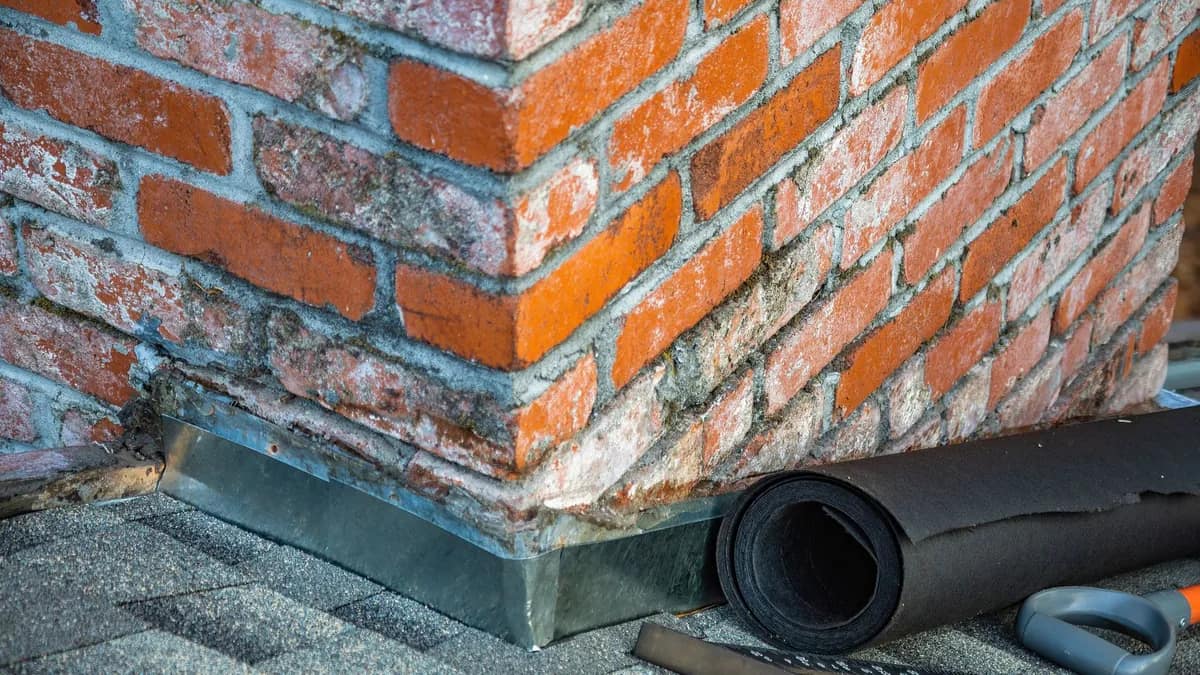
Roof Flashing Types, and Where Yours Will Fail First
Step, counter, valley, and apron flashing each do a different job. What each type does, and which ones fail first on a Gulf Coast roof.
 Roofing Materials
Repair or Replace? How to Decide on Your Roof
A leaking or aging roof doesn't always need a full replacement. Here's the honest framework for deciding between a repair and a replacement on the Gulf Coast.
 Roofing Materials
How Long Does a Roof Last in Alabama's Heat?
There's no single number for how long a roof lasts on the Gulf Coast. What actually shortens a roof's life in Alabama's heat, humidity, and storm exposure.
Free inspection · no obligation
Want someone to actually look at your roof?
Free inspection anywhere in Baldwin or Mobile County. We climb it, photograph it, and tell you plainly what we found — then put it in writing.
Licensed Alabama roofing contractor #7430. Free estimates across Baldwin and Mobile County.
Loading the quote form…